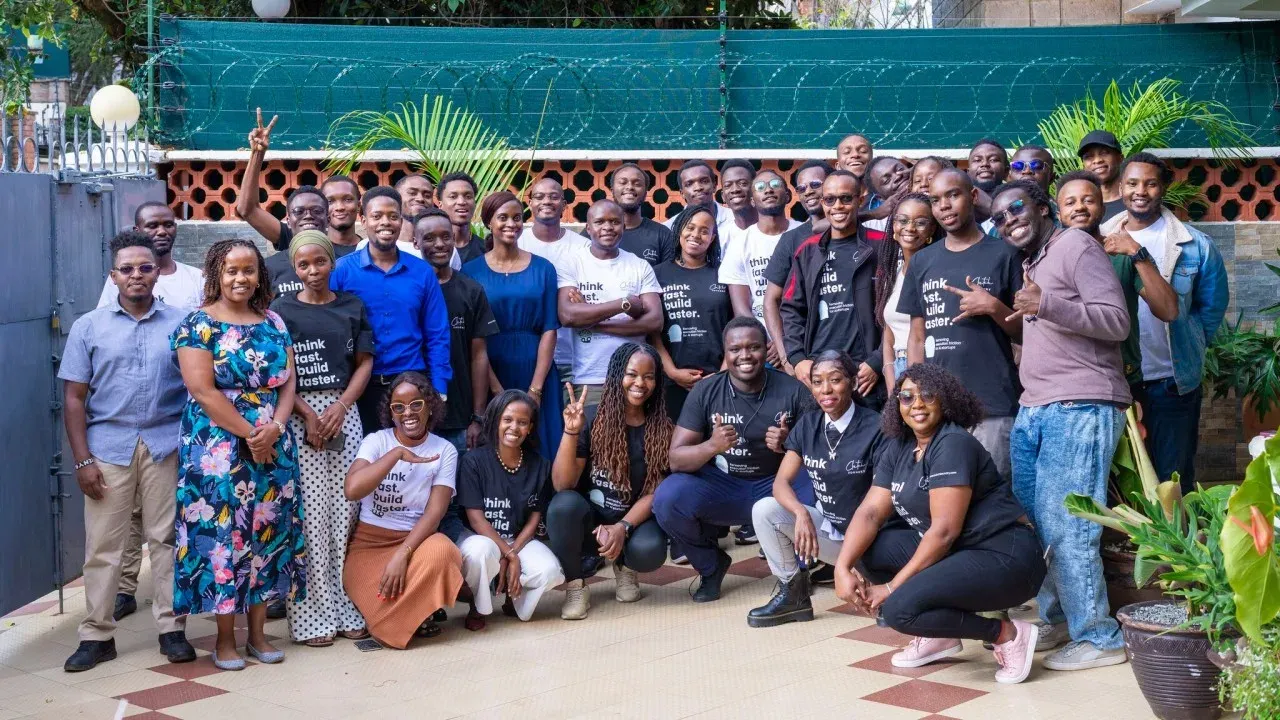
In the age of acceleration, what used to take startups 100+ days can be done in 30:
- Co-founding teams can iterate quickly through weekly build sessions to find the conviction needed to commit to next steps.
- New tools like Cursor and Lovable enable multiple iterations over a day rather than relying on weekly reviews.
- Doctors can vibe code to contribute to code bases, and developers can do clinical research validating technical assumptions. Everyone can talk to customers.
What’s needed is the environment and coaching that supports the new mindset and culture to innovate with the latest tools. Just as there are dojos to train different levels of sparring in martial arts, AI builders need access to studio-like environments to level up their own skills.
This is what we did in our first partnership with Clutch AI. We bridged the best of the SF Bay Area and Nairobi to explore new solutions to current problems in healthcare.
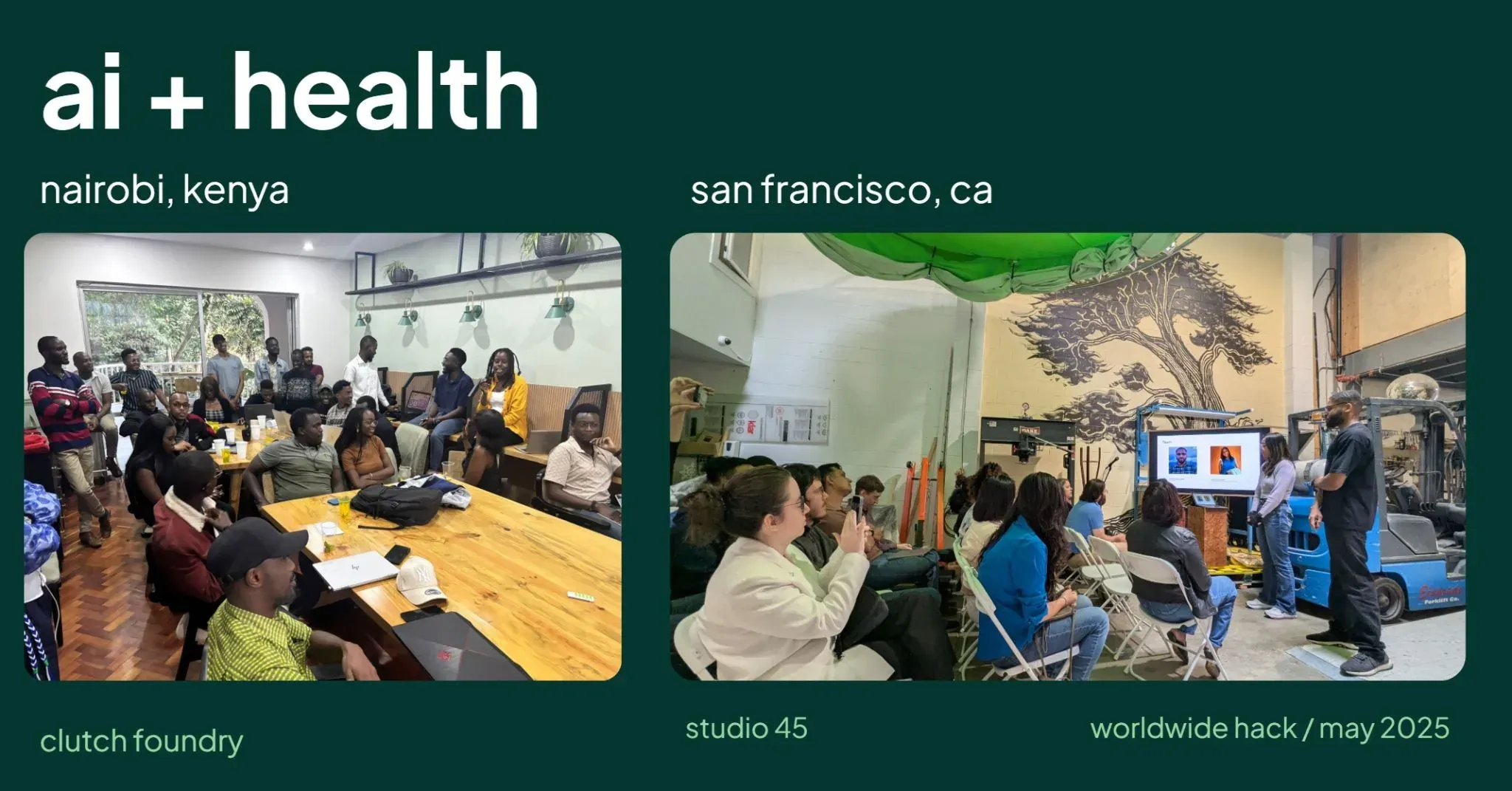
Clutch is building the “Y Combinator of Africa” through a foundry model that helps startups understand machine-learning pipelines and build with the latest infrastructure while also serving as a hub of innovation. Their thesis spans healthcare, agriculture, and fintech. This was the first activation to get people building in healthcare.
We helped them launch their first cohort of 5 AI + health startups. From no idea and no team, through multiple demos and iterations for co-founding teams.
More than a hack, this is innovation training
Calling it a hack was intentional. Hack is the rally call for people to solve problems immediately without waiting until the perfect moment or waiting for permission.
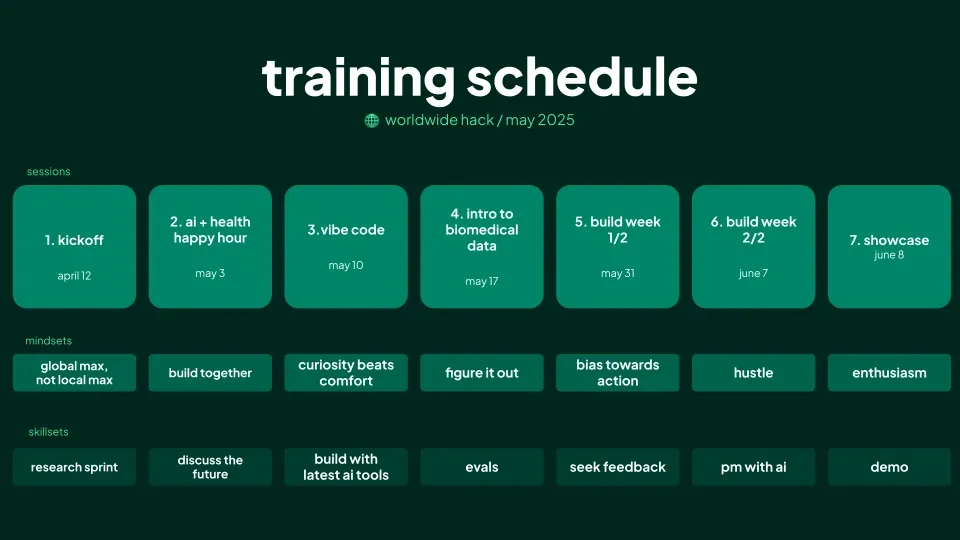
In reality, this was more than a hack. It was more like a 30-day community venture studio, where networks were built, mindsets were trained, and new skills were applied to see what’s possible.
- Weekly sessions combined the best mindsets, skills, and milestones in building a startup.
- With weekly advancements in AI, everyone built with the latest tools as new updates came out.
- Ideas win with a strong feedback culture.
The real magic came from the partners in the room to help catalyze the right kind of ideas.
- Different clinicians and health system partners joined the sessions in person, gave feedback for teams, and even helped with problem memos, which are all listed at the end.
- The latest in AI and startup building came from the founders. Nzisa Kiilu and Paul Mutemi, PhD are the dream team for Clutch, bringing together decades of experience from Google and Meta. Dylan Holland and I brought in the latest in startups and hardware. We also had guests from DeepMind, Stanford spinouts, and Bay Area VPs supporting teams.
- The latest in hardware came with some global health champions. Shout-out to the Cephla team, with Hongquan Li and Pranav Shrestha, for their Octopi used for malaria diagnosis and sickle cell. It was great to see a hardware company focused on global applications and open-access datasets that catalyze new solutions. Ahmad Saleh also supported people’s first introduction to remote patient monitoring. The winning team integrated wearable data for maternal-health check-ins during pregnancy.
And builders really enjoyed it.
“It was so fulfilling to see the teams’ significant progress especially in navigating the unique regulatory and ethical considerations within the AI health sector.” — Dr. Vincent Kipkorir, BS, MD
“Okay this @ClutchFoundry hackathon might just be the best $20 I have ever spent. Best 6 weeks of 2025.” — Dr. Wechuli Simiyu
“It’s been amazing to witness the journey and the magic that happens when people who are passionate about their work, come together.” — Della Mbaya
“This was my 5th hackathon in the past 2 weeks, and the only one where the space, the vibe, and the conversations all came together to find me hacking on something I care deeply about. Such a treat to spend time with you all!” — Roman Gurovich
“So many creative solutions from brilliant teams. Huge thanks for creating the space for this kind of meaningful, urgent innovation to happen.” — Samuel Donkor
Demos from Nairobi
These are not ending points, these are starting points. Teams went 0 to 1 in 30 days, and are figuring out next steps post hack.
1. PregMap 🏆
Problem: Kenya’s high maternal deaths trace to low antenatal-care attendance and paper-based records that scatter data, delay risk detection (e.g., pre-eclampsia), and keep clinicians blind to patient history.
Solution: PregMap digitizes ANC records in one platform, pushes SMS/USSD reminders, tracks vitals, auto-flags high-risk pregnancies, and lets clinics subscribe through SaaS for seamless, centralized care coordination.
Team: Dr. Ian Miako, John Mwaura, Elvis Kipkirui, Kevin Akama, Daniel, and Dr. Melanie Akinyi.
2. Waridi
Problem: 75% of Kenyans are unaware of mental-health issues, and most can’t afford care. Stigma, lack of awareness, and high costs lead to silent suffering and rising suicide risk—especially among unemployed youth like Aisha.
Solution: Voice-based mental-health screening via AI that detects distress in under 25 seconds, gives first-line advice, and refers high-risk users to professional helplines like the Kenya Red Cross.
Team: 2 medical doctors, 2 software engineers, 1 data scientist, 1 AI engineer.
3. AfroEvidence
Problem: Less than 3% of African medical research makes it into global guidelines, leaving clinicians without context-specific, evidence-based support at the point of care.
Solution: An AI-powered platform that indexes local clinical research and case data, delivering insights through an API or app integrated into hospital systems to support real-time decision-making and improve outcomes.
Team: Alex Wanjai, Stephen Kairu, Dr. Nicholas Njonjo, and Dr. Wechuli Simiyu.
4. Kia
Problem: Patients waste hours in queues only to see the wrong specialist or leave without care; hospitals struggle with underutilized clinicians and poor triage systems.
Solution: Kia is an AI chatbot that lets users describe symptoms or upload images, provides instant triage with likely diagnoses, and recommends nearby, relevant specialists. On the backend, it generates qualified patient leads for doctors through a subscription model.
Team: Enoch Otieno, Dr. Fidelis Bridget, Samuel Donkor, David Andai, and Oscar Madegwa.
5. DermAssist
Problem: With only 24 dermatologists for over 50 million Kenyans, general practitioners are left to diagnose complex skin conditions without adequate training—often leading to late or missed diagnoses and preventable harm.
Solution: DermAssist is an AI-powered skin diagnostic assistant for general practitioners. Using images taken during routine care, it offers context-aware differential diagnoses trained on African skin data, aiming to improve accuracy and outcomes.
Team: Nicole Wambui Otieno, Dr. Koome, Dr. Dishon, and Bruce Clinton.
If you want to see San Francisco, including voice biomarkers and machine-learning pipelines for new sickle cell therapeutics, check this recap.
Final debrief
What went well
- Every team had a doctor building with them. Vibe coding = for everyone. It was great to see doctors roll up their sleeves and solve their own problems and jump right in. Day 1 was slides and hesitancy. Week 1 was vibes and diving right in.
- Multiple locations. Bridging the tech and mindset from the SF Bay Area with the optimism and opportunities to build locally was a winning recipe.
- Week over week momentum. Every single week teams had new unlocks and new learnings. While feedback culture is at its core, it also evolved into a community, which is easy to take for granted in places like SF, and is not normal elsewhere in the world. Yet…
- Great experience. The Clutch team crushed it in terms of making people feel welcome and also pushing high standards. Thank you Della Mbaya and the team on the ground! And appreciate your leadership Nzisa Kiilu through the pilot.
- Commitment to solving real problems. No AI ads or faceless YouTube channels here. By focusing on health, everyone focused on understanding real problems and finding opportunities to take the first step to solve them.
Where we will improve the next one
- More validation. Talk to users and customers as they build. We had clinicians as mentors, and doctors on teams, but no project reached the clinic in their iteration cycle. That’s the next step for this cohort. We’ll help the next teams hit this point sooner.
- More builders, more locations. This worked too well not to expand and see how far we can push the worldwide hack.
- More resources and problem memos. Interviewing patients, clinicians, and finding ground truth through in-depth conversation. These were the hidden gems of the hack. For the next one, we can do more of these.
Open resources
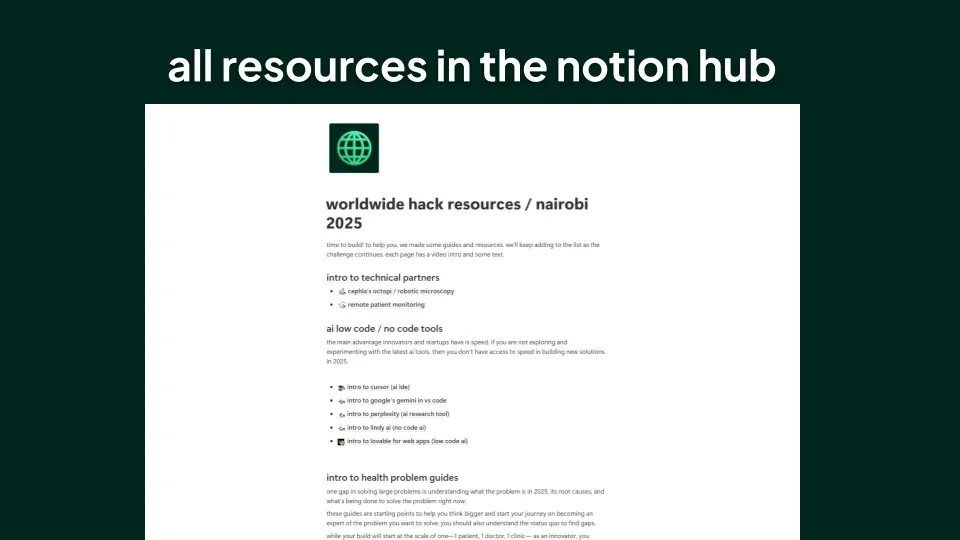
One of the best parts of working with the Clutch team is the push to help everyone in the community level up. We’re opening up the resources from this hack for future builders.
This is more than activating startups, it’s activating entire ecosystems.
Next up, we’re planning an AI-enabled hardware worldwide hack in summer 2025 and a maternal health hack in telemedicine in fall 2025. If you want to support future hacks like this, partner to run a local hub, or collab, let’s connect.