The Experiment
With foundational large language models getting more capable, it's important to see how that can help speed up innovation cycles to solve real problems.
Healthcare innovation typically is measured in years. What would that look like to compress it into weeks and months?
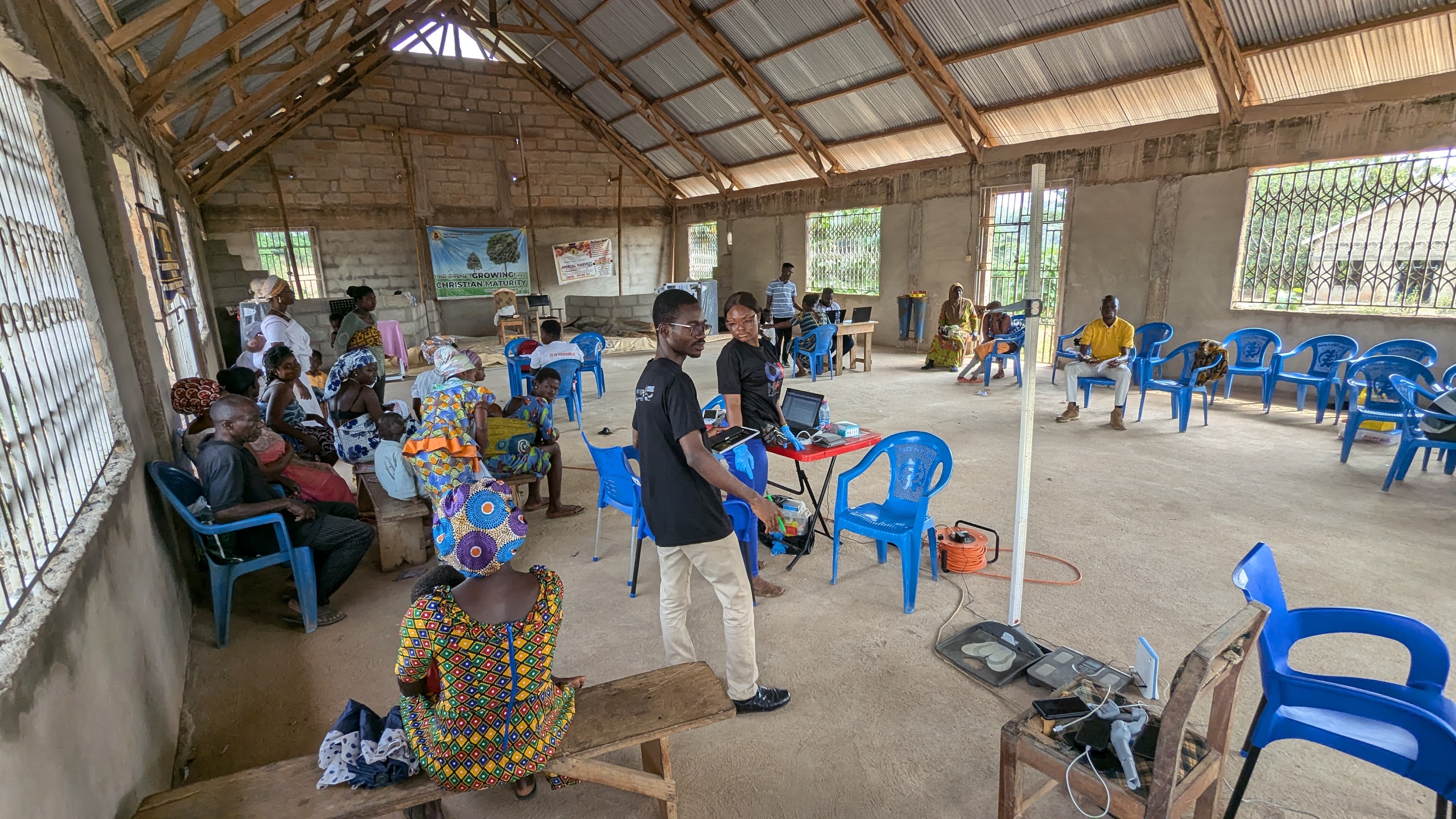
This studio enabled small teams to make big swings at solving global health problems across rural Ghana, Germany, and SF Bay Area.
We partnered with OKB Hope Foundation, Ghana's first mobile clinic, to accelerate path to deployment and testing.
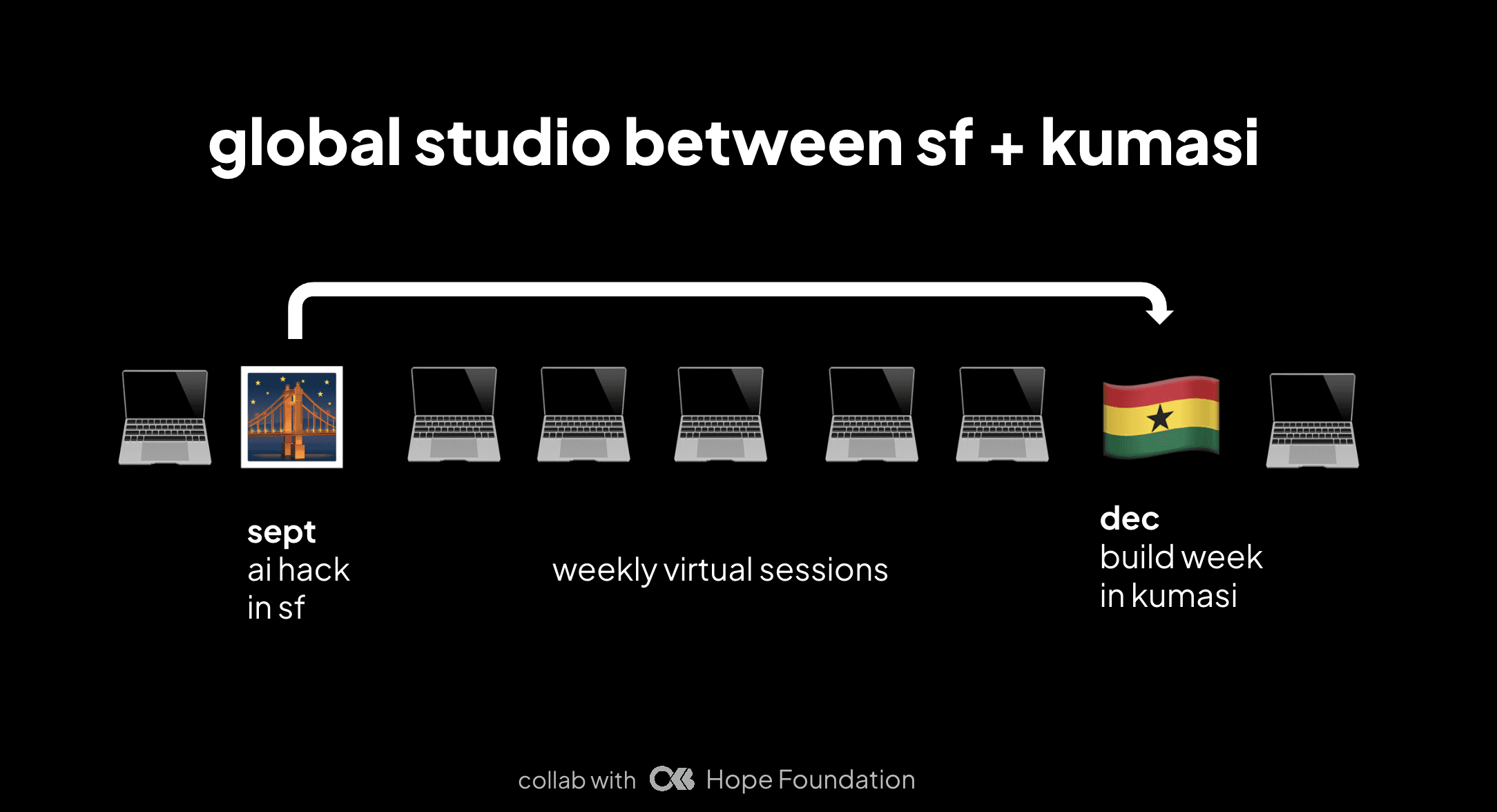
The structure: 24-hour kickoff hack in SF → 10 weekly virtual build sessions → week-long build sprint in Kumasi, Ghana for real-world testing.
The result: 50 builders, 11 initial demos, and 5 projects that made it all the way to on-the-ground testing with patients and healthcare workers.
Why This Mattered
Healthcare moves slowly. For good reason, lives are at stake. But that conservatism has a cost.
424,000 TB deaths across Africa. Mental health staffing shortages in Ghana hitting 25% of teens. Maternal mortality that could be prevented with better monitoring and data.
The OKB Hope Foundation works on these problems every day. They needed tools that could scale their impact. Not white papers. Not pilots that sit in a drawer. Actual working prototypes that could be tested immediately.
We had a hypothesis: With the latest AI tools, a global team could move from idea to field-ready in 12 weeks instead of 12 months. In many ways, we were right.
The Structure: Hack → Build → Test
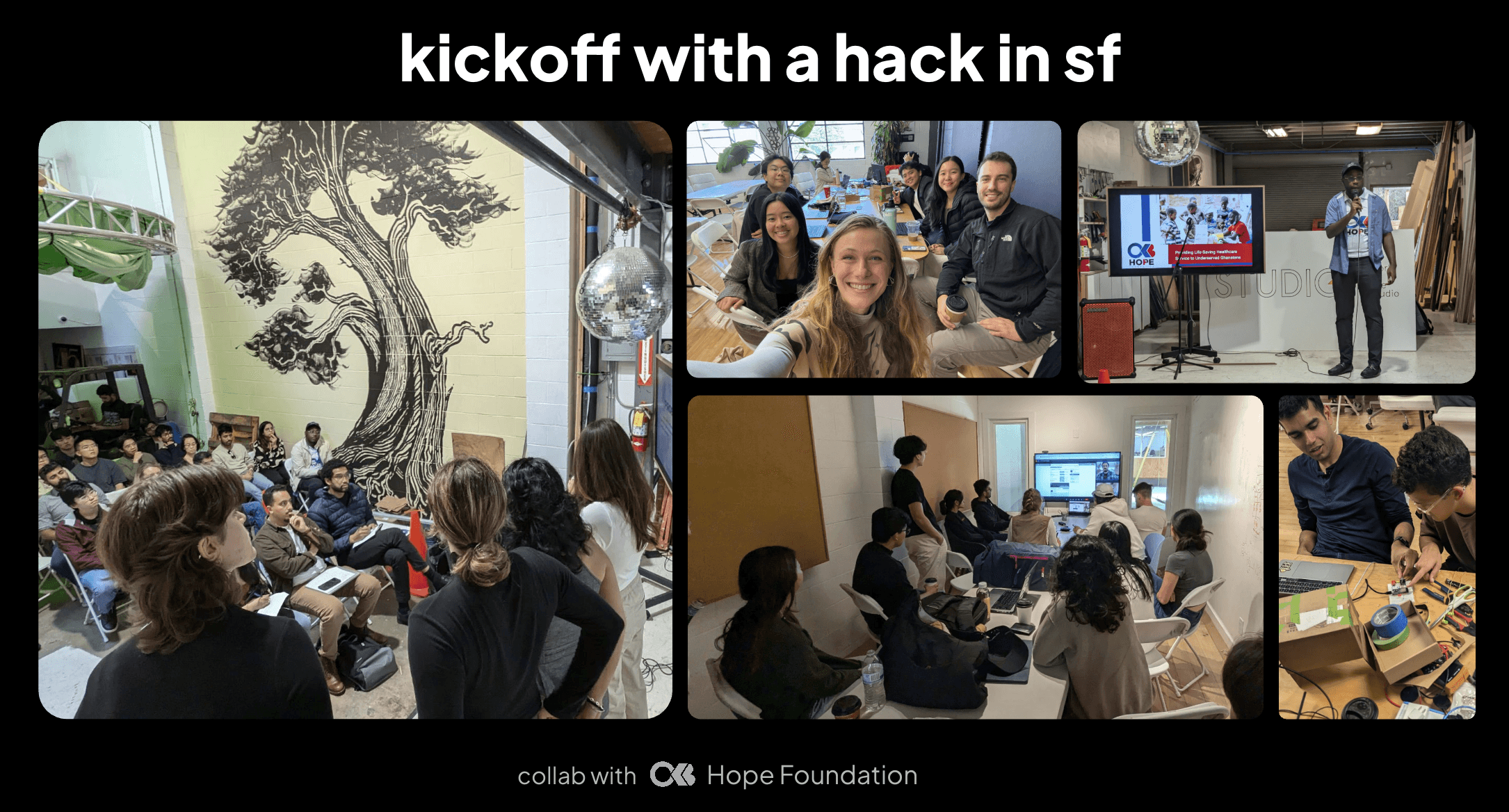
September: The Kickoff Hack in SF
We started with a 24-hour AI hack at Studio 45 in San Francisco. 100 people showed up. 50 builders formed teams on the spot. Technical partners like AdalFlow, Health Universe, and HAL51.AI brought cutting-edge tools.
The brief was simple: How might we increase quality and/or access to better healthcare globally using the latest in machine learning?
Teams brought their own hardware—Apple Watches, EEG headsets, custom sensors. Some tackled dementia care (MindMeadow). Others built TB screening tools using audio analysis. One team designed an at-home kit for analyzing menstrual stem cells (MenSci AI).
Eleven demos in 24 hours to kick this off.
October-November: Weekly Virtual Build Sessions
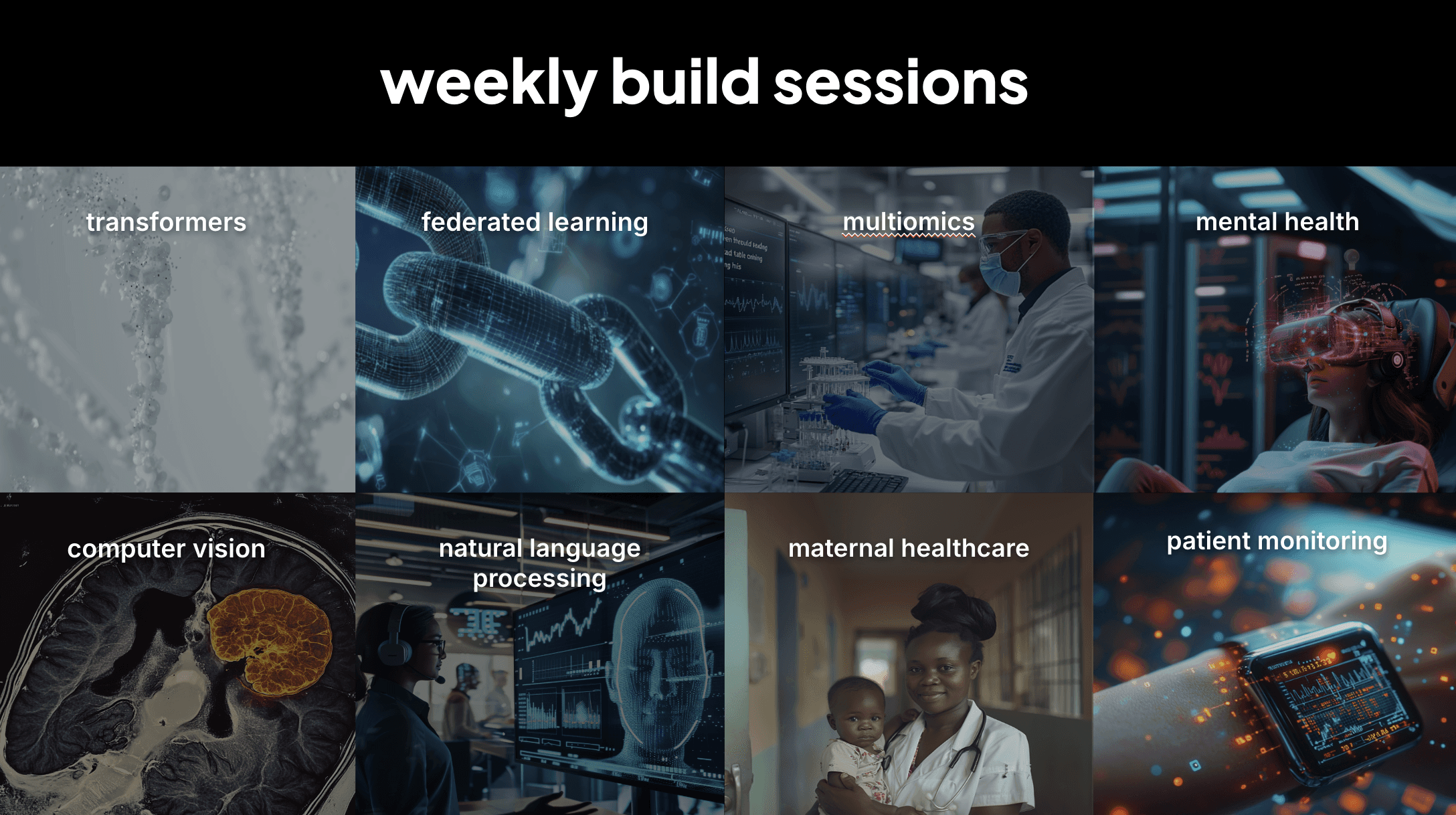
Every week for 10 weeks, teams joined virtual sessions to dive deeper into specific technical areas:
Transformers & NLP for processing clinical notes and patient interactions
Computer vision for analyzing medical imaging and diagnostic photos
Federated learning for privacy-preserving model training across hospitals
Maternal healthcare focus sessions with OKB clinicians
Patient monitoring with wearable data integration
Mental health applications and multiomics analysis
These weren't just lectures. Teams built, got feedback, iterated. Doctors learned to code. Engineers learned clinical workflows. Everyone talked to potential users.
The format worked because it compressed the traditional "learn → build → validate" cycle into weekly sprints. No waiting for the perfect moment. No permission needed.
We also had guest fireside talks:
Dr. Shah, CMO of Qure AI
Vivian, Global Health Catalysts at Harvard Med School
Special projects leads at Perplexity
Logistics team of Zipline, Ghana
December: Build Week in Kumasi
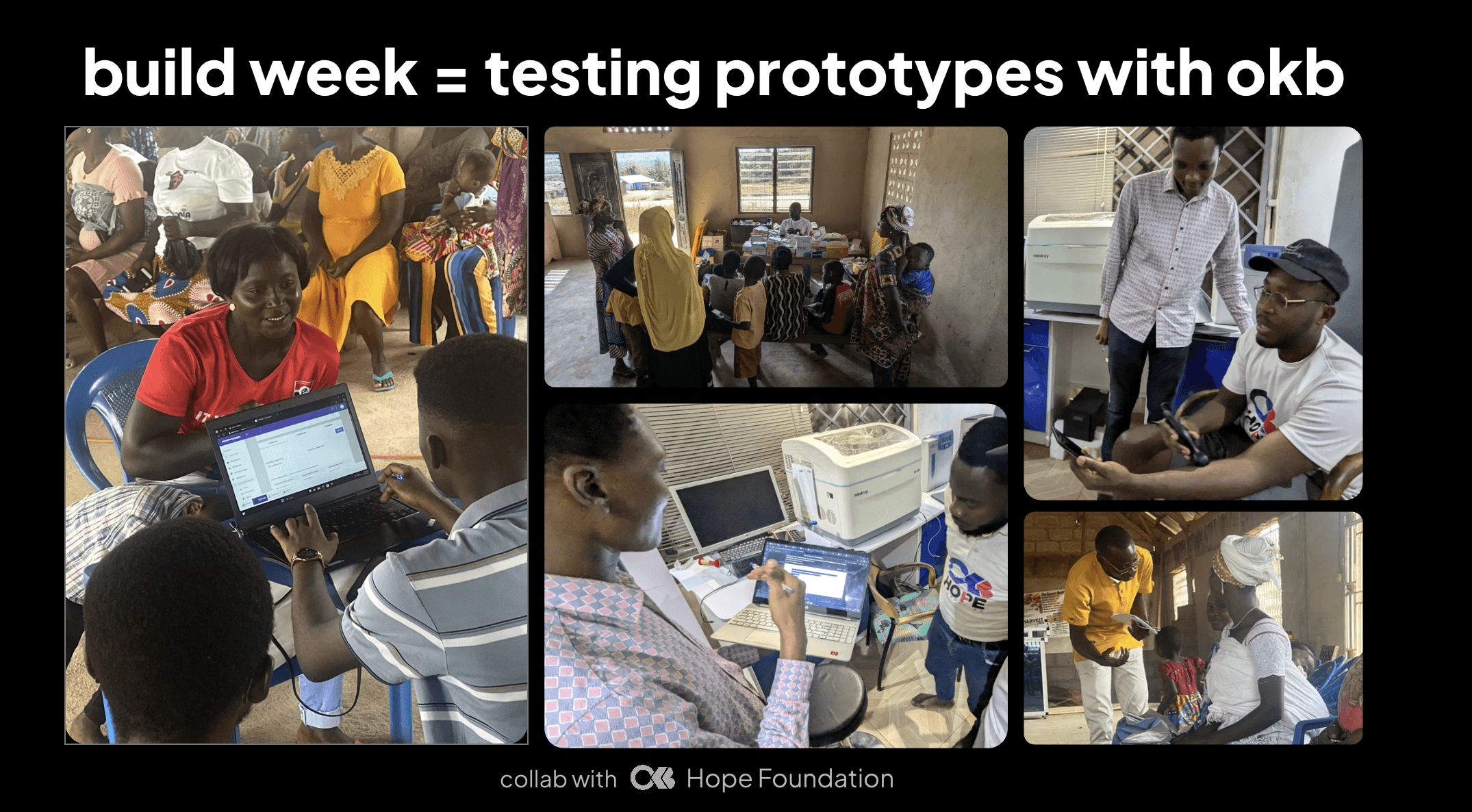
This is where theory met reality.
Five projects made the cut to deploy to Ghana for real-world testing. Teams packed up their prototypes and headed to Kumasi to work directly with patients, healthcare workers, and community members.
What Actually Got Built (And Tested)
From Ghana 🇬🇭
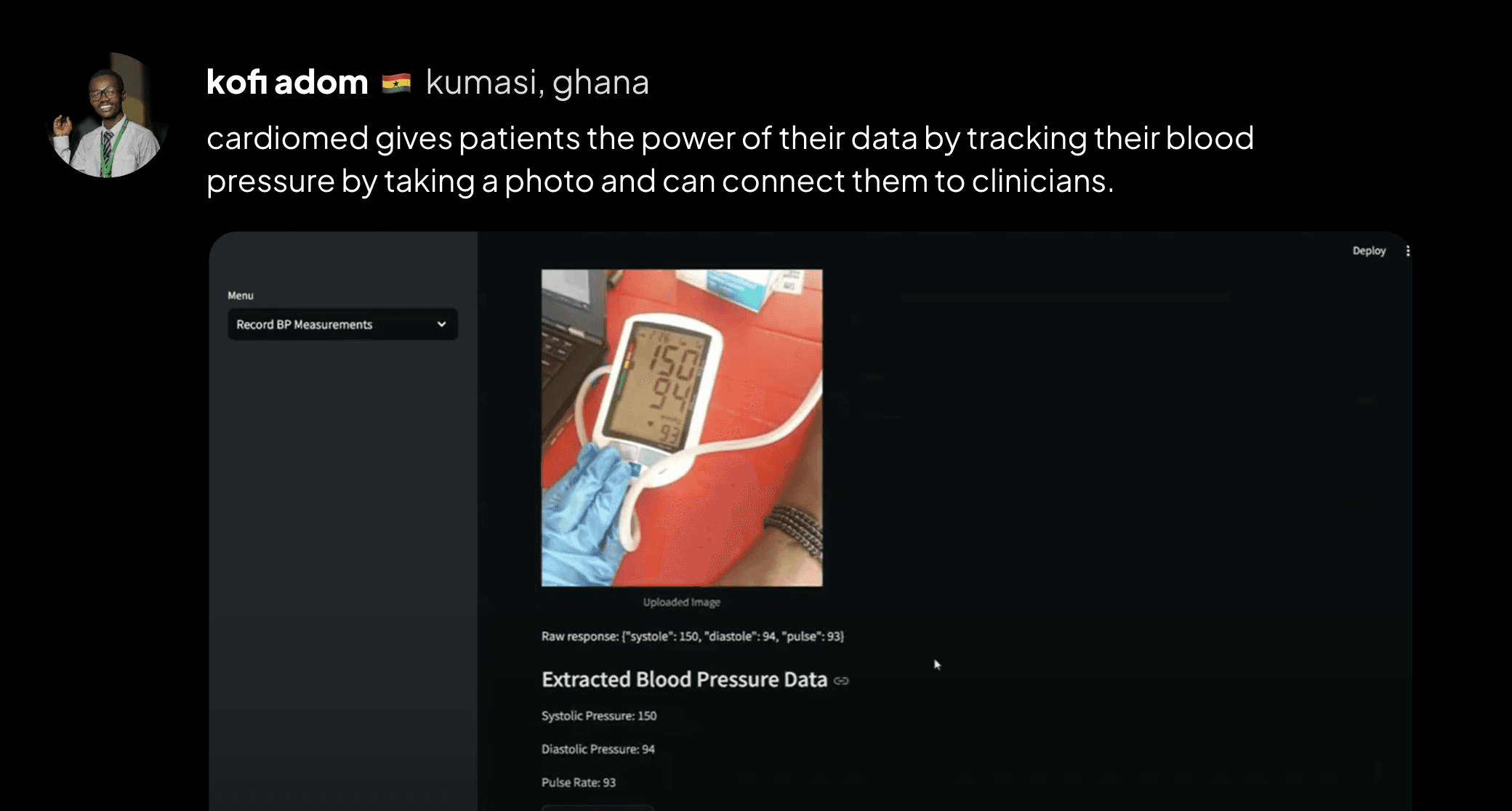
1. CardioMed (Kofi Adom, Kumasi)
Blood pressure tracking via photo analysis
The problem: Patients need continuous BP monitoring but lack regular access to devices. The solution: Take a photo of any BP reading, extract the data with computer vision, track over time, and connect patients to clinicians. Tested with actual patients who could now own their health data.
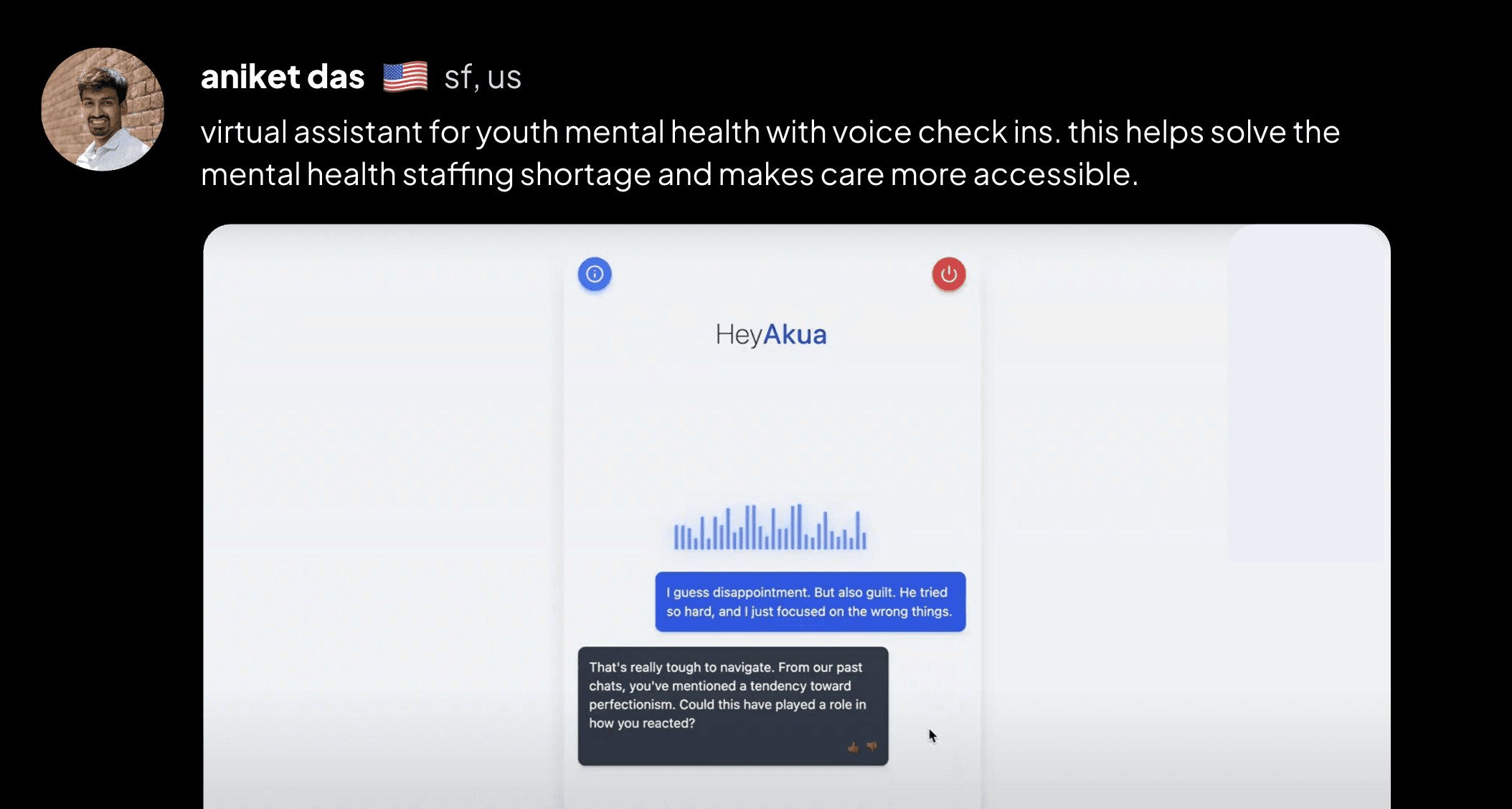
2. Hey Akua (Aniket Das, SF → Ghana testing)
AI voice mental health screening
25% of Ghanaian teens face anxiety or depression. Barriers to care include cost and stigma. Hi Akua provides voice-based mental health check-ins and screening—making initial assessment accessible before connecting to professional support. Tested with youth groups in Kumasi.
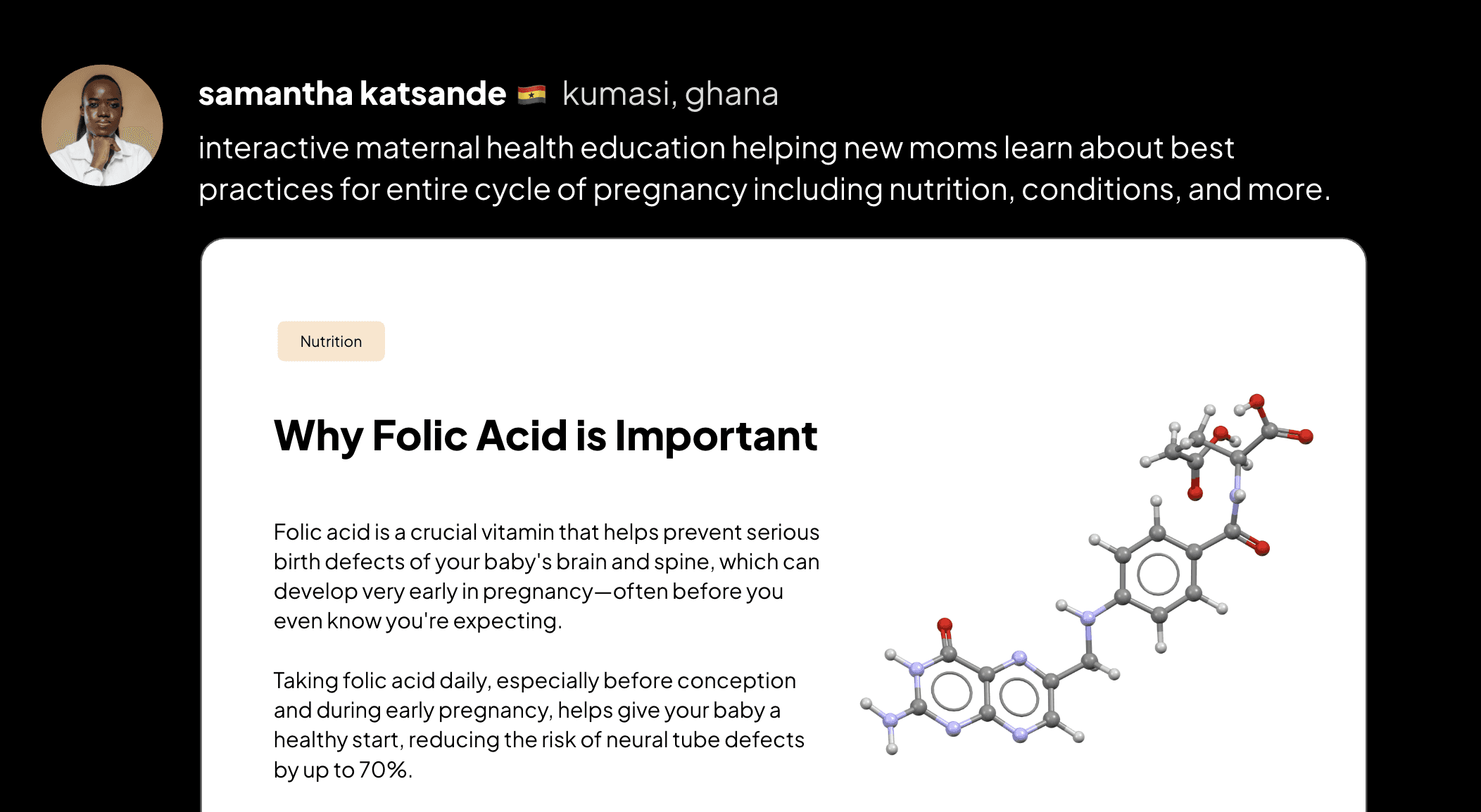
3. Maternal Health Education (Samantha Katsande, Kumasi)
Interactive pregnancy care companion
New mothers need reliable information about nutrition, folic acid, warning signs, and prenatal care. The team built an interactive education platform with visual guides and local context. Tested with expectant mothers in community health settings.

4. CTG Analysis Tool (Sam Donkor, Kumasi)
Reducing false positives in fetal monitoring
Expensive CTG devices often give false positive readings, leading to unnecessary C-sections. The team explored open-source alternatives and ML models to improve accuracy. Worked directly with hospital staff to understand current pain points.
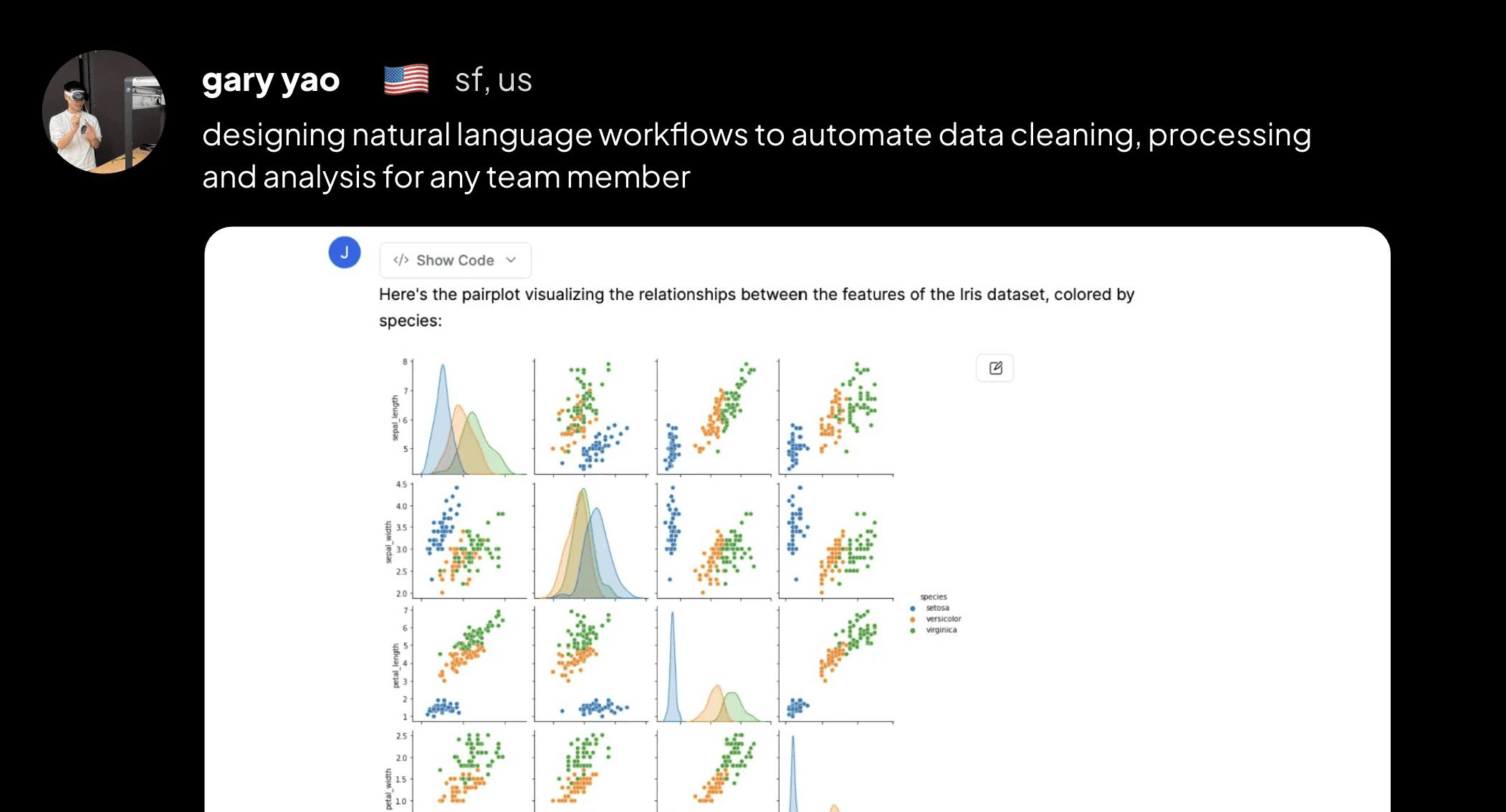
5. Data Analysis Workflow (Gary Yao, SF)
Natural language processing for clinical data
Healthcare workers in low-resource settings don't have data scientists on staff. The team built NLP workflows to automate data cleaning, processing, and analysis—making it accessible to any team member. Deployed and tested with OKB foundation staff.
From Around The World 🌍
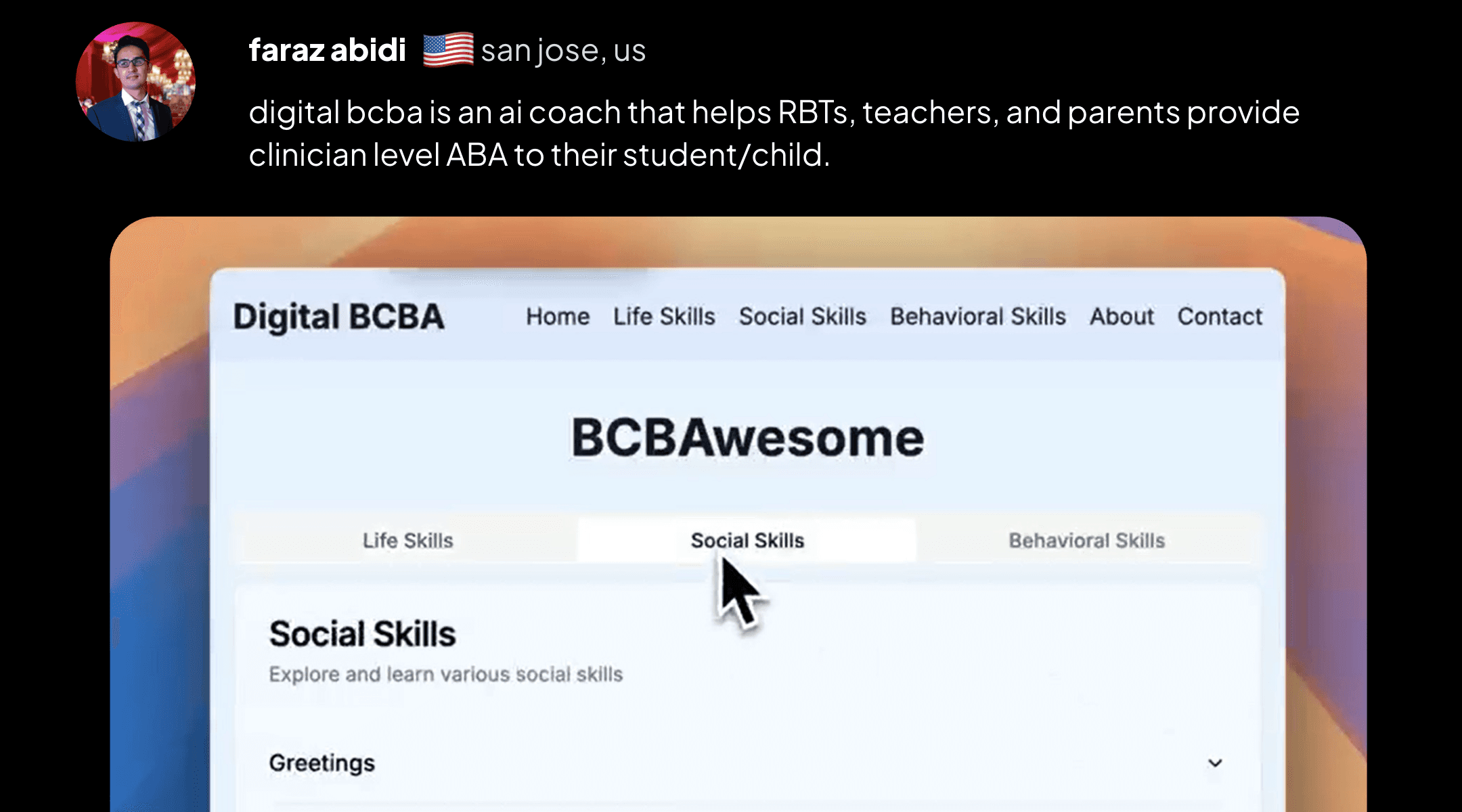
Digital BCBA (Faraz Abidi, San Jose)
AI coaching for behavioral therapy—helping RBTs, teachers, and parents provide clinician-level ABA therapy.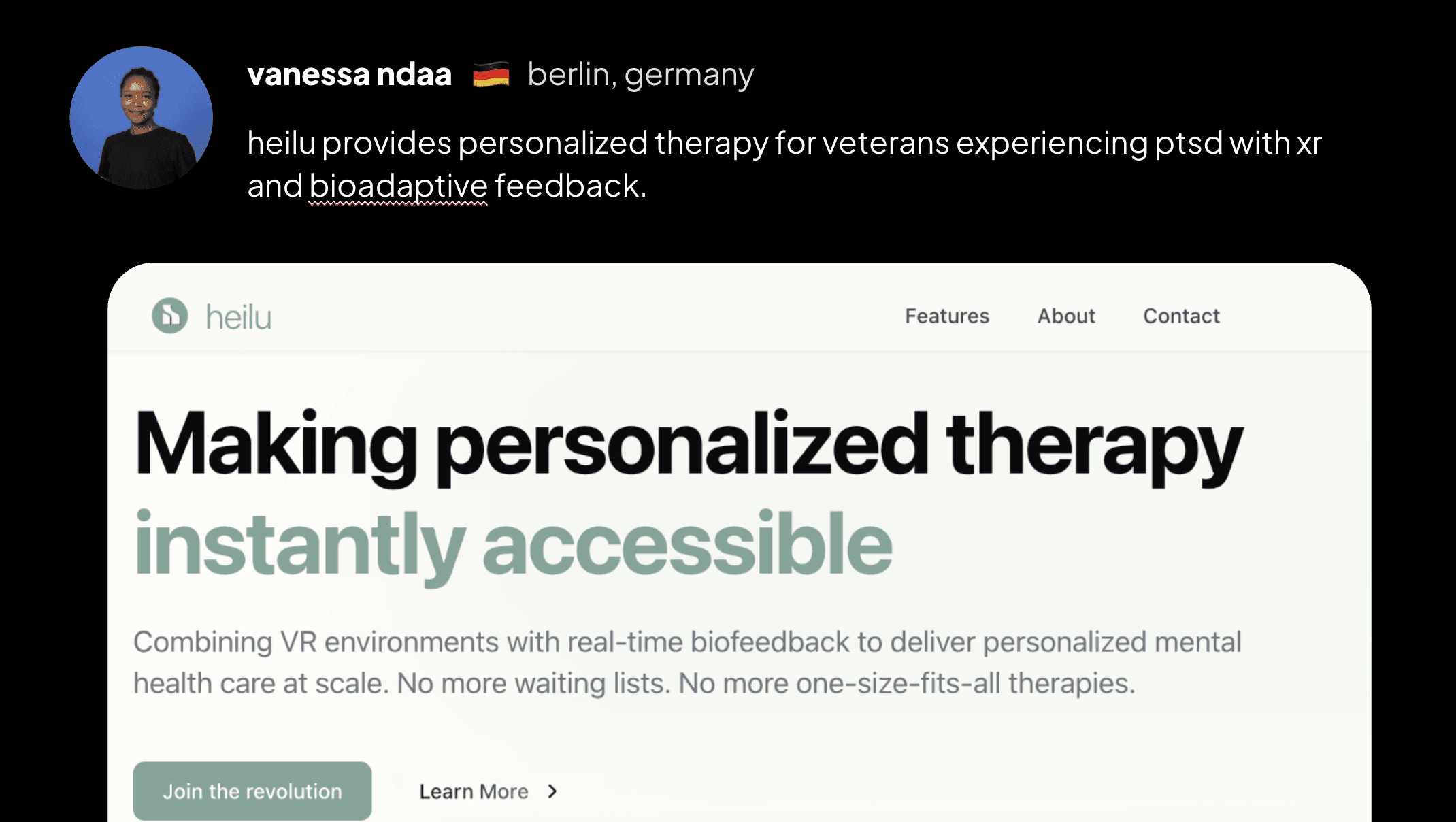
Heilu (Vanessa Ndaa, Berlin)
Personalized PTSD therapy for veterans using XR and bioadaptive feedback.
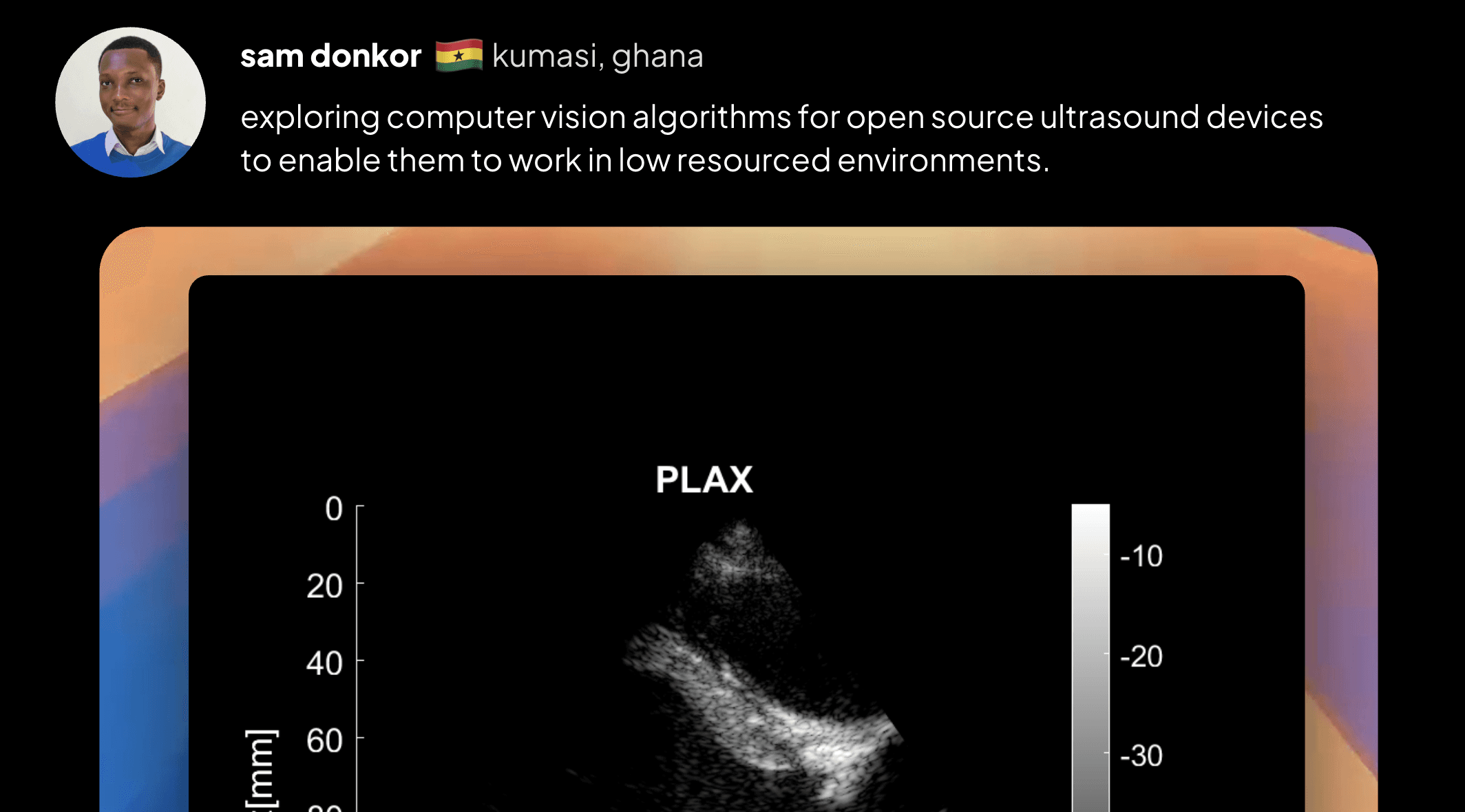
Open Source Ultrasound (Sam Donkor, Kumasi)
Computer vision algorithms enabling affordable ultrasound devices to work in low-resource environments.

MenSci AI (Juliette Humer, SF)
At-home kit for analyzing menstrual stem cell viability using random forest regression models.
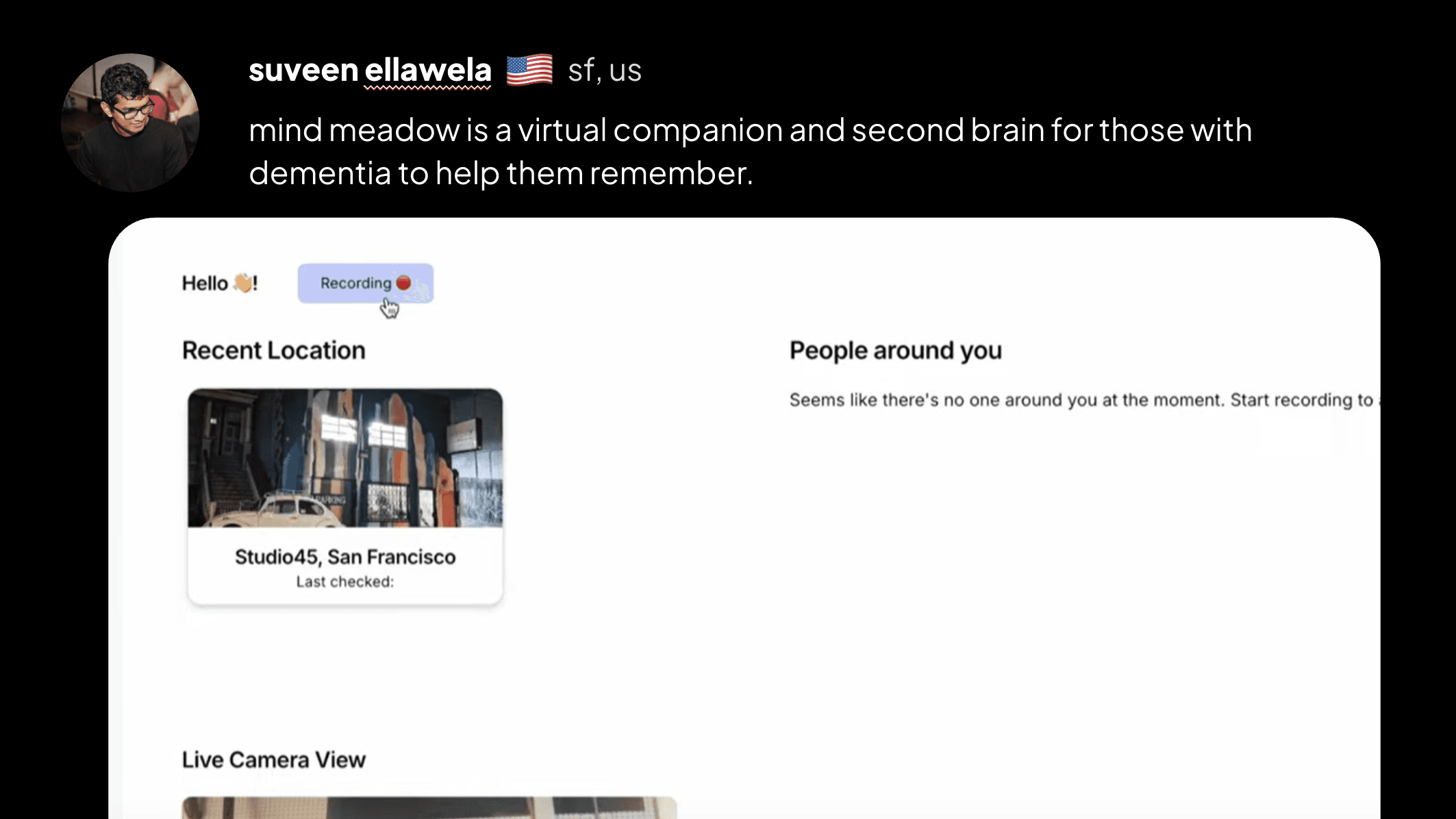
MindMeadow (Suveen Ellawela, SF)
Virtual companion for dementia patients using facial recognition and conversation tracking.
What We Learned
What Worked
Global collaboration scales. The SF hack seeded ideas. Weekly virtual sessions built technical depth. Ghana testing provided ground truth. This collaboration became and exchange for global teams.
Build-in-public creates momentum. Weekly demos forced progress. Peer feedback drove quality. The community became the accountability system.
Hardware + software integration matters. Teams that brought wearables, sensors, and custom hardware created more compelling solutions than software-only approaches.
Where We'll Improve
Earlier customer validation. Teams had clinicians as mentors and doctors on teams, but most projects didn't reach actual clinics until month 3. Next cohort will start user testing in week 2.
More build time in Ghana. One week wasn't enough. Teams needed 2-3 weeks to properly iterate based on field feedback. We'll extend the deployment window.
Better pre-hack preparation. Teams that came in with domain knowledge moved faster. We'll provide problem memos and user research ahead of the kickoff hack.
Regulatory/deployment roadmap. Several projects are ready to scale but need guidance on approvals, partnerships, and go-to-market. We'll bring in advisors earlier.
Sustained funding for top projects. The best teams shouldn't have to stop at demo stage. We're exploring partnerships to fund continued development.
The Partners Who Made This Possible
OKB Hope Foundation (Osei Kwadwo Boateng): For flying to SF, hosting us in Kumasi, and connecting teams with real patients and healthcare workers. This program doesn't exist without your on-the-ground work.
Studio 45 (Nate Padgett): For hosting the kickoff hack in the best hardware space in San Francisco.
AdalFlow (Li Yin): For the library to build, evaluate, and auto-optimize LLM tasks—and for keynoting both the kickoff and closing sessions.
Health Universe (Dan Caron): For platform infrastructure that let teams go from AI-assisted coding to deployment in 5 minutes.
HAL51.AI (Vinay Prabhu): For the Lemur Box 3D display tech and opening keynote about the importance of interaction design in health applications.
Judges & Advisors: Derick En'Wezoh (Susa Ventures), Ahmad Saleh (Vivalink), Hiren Kumar (Zipline), and all the clinical advisors who joined weekly sessions.
What's Next
This was a proof of concept. It worked.
We proved that:
Builders can iterate from idea to field-ready in 90 days
Global teams can collaborate effectively across time zones and contexts
The latest AI tools genuinely accelerate healthcare innovation
Real-world testing reveals insights that no amount of desk research can match
What's next:
We're partnering with Clutch AI to run a 30-day worldwide hack bridging SF and Nairobi (see our spring 2025 recap). We're exploring partnerships in Latin America and Southeast Asia. And we're building an open-source playbook so other organizations can run similar programs.
The goal isn't just to activate startups. It's to activate entire ecosystems.
If you're a health system, foundation, or technical partner interested in running a studio in your region, let's talk.
If you're a builder who wants to join the next cohort, follow along at worldwide-studios.com.
Final Thoughts
Healthcare innovation doesn't have to take years. With the right structure, the right partners, and the right tools, small teams can build solutions that matter in weeks, not decades.
This winter proved it's possible. Now we're exploring partnerships that help show it scales.