Living the American Dream. — Stef
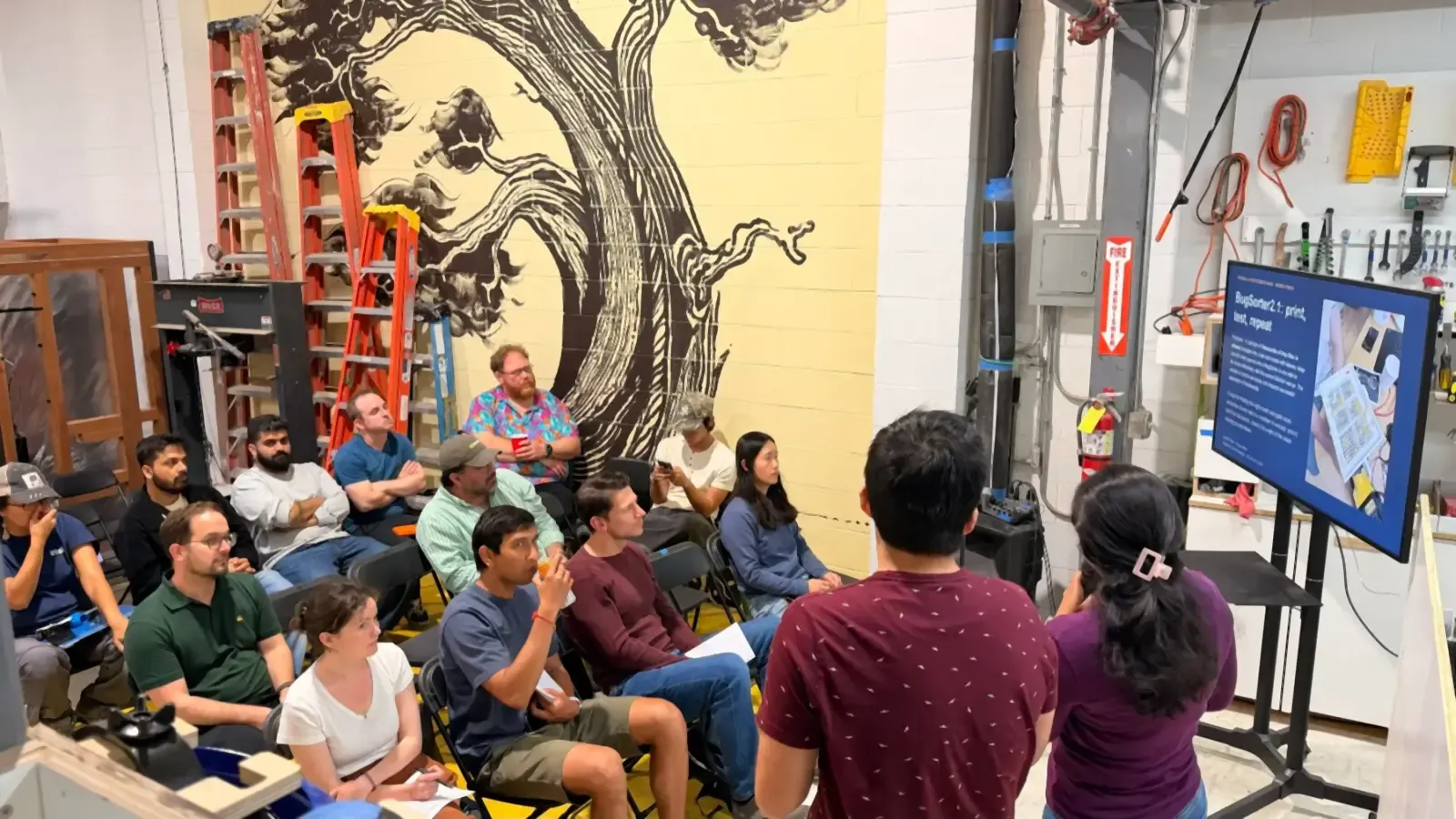
More than 200 people signed up for our seventh hardware hack, and 6 teams joined for October 24–25 at Studio 45 in San Francisco to build with the latest AI, robotics, and biology tools. Every team shipped demos in 24 hours, and RoboSwap took the overall win.
We run these hacks to put people with different backgrounds in one room and see what is possible when software, hardware, and wetware meet. The space is heating up. Hundreds of millions of dollars are flowing into autonomous science, yet there is still a wide gap between that funding and what a lab actually needs solved day to day.
This weekend we went straight at that gap, with a real lab partner, a liquid handler, and hardware paired with fabrication tools.
The setup
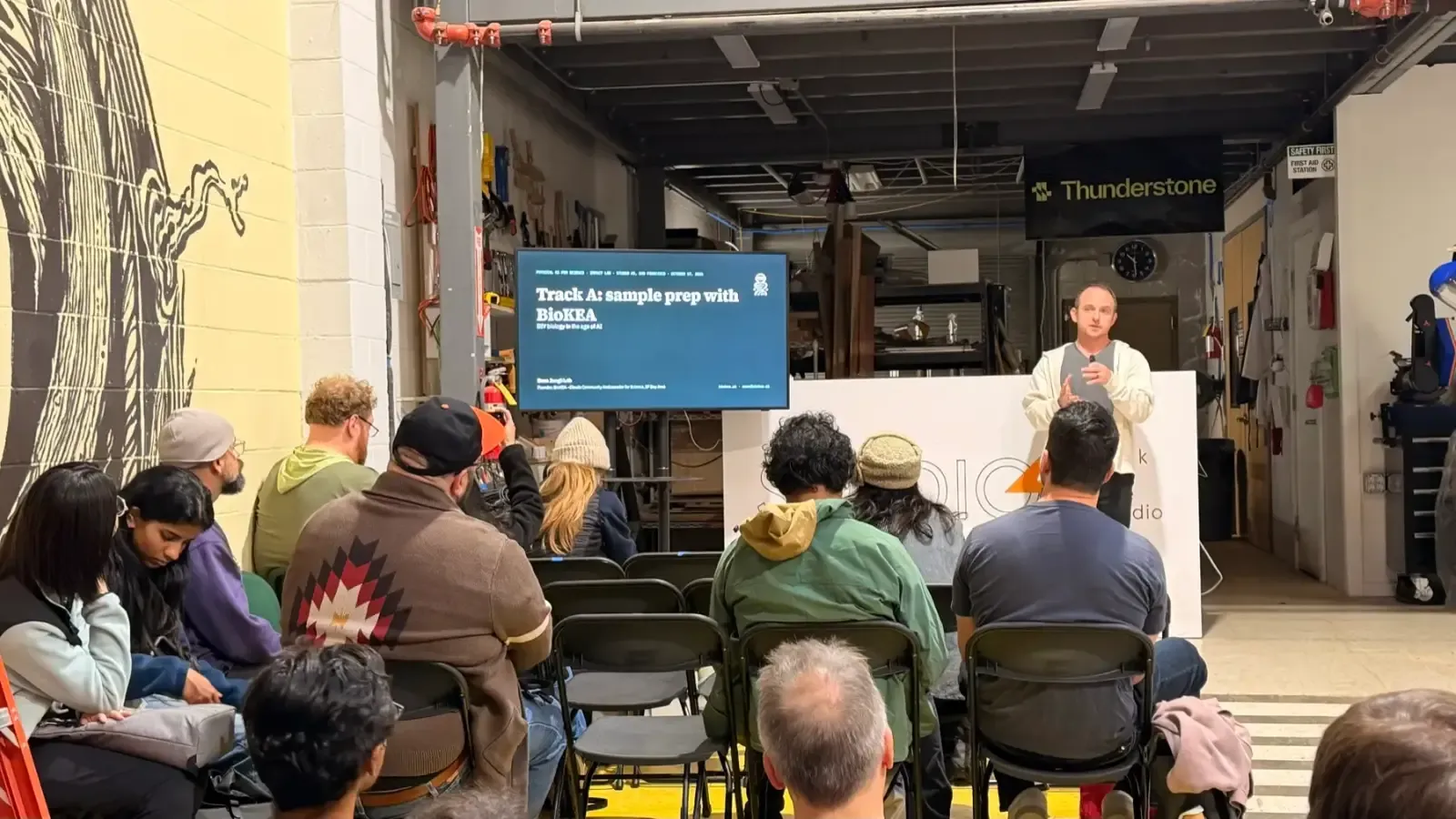
Teams formed on the spot on Saturday morning. The first hour was problem research, where teams used the latest agent tools to work out what they wanted to build and why. Then they built through the night until the robots went to sleep at midnight, and back again Sunday morning until submissions closed at 2:30 p.m.
This was the first weekend where we saw the same acceleration from software development in text to 3D print workflows as well as robotic development. The foundation models are enabling small teams to move faster on harder challenges.
Three build tracks
Track A: Sample Prep with BioKEA
Question: How do we make BioKEA’s soil and water sample prep robust with a robotic sieving process?
BioKEA is a 5,000+ square-foot wet lab in Berkeley doing DNA barcoding, environmental DNA, and long-read genomics. Their samples start as Malaise-trap bags: thousands of tiny insects in ethanol, tangled with leaves, twigs, and dirt. Before anything can be imaged, picked, or barcoded, someone has to break that clump apart and sort it by size without crushing a single specimen.
Track B: Opentrons Flex
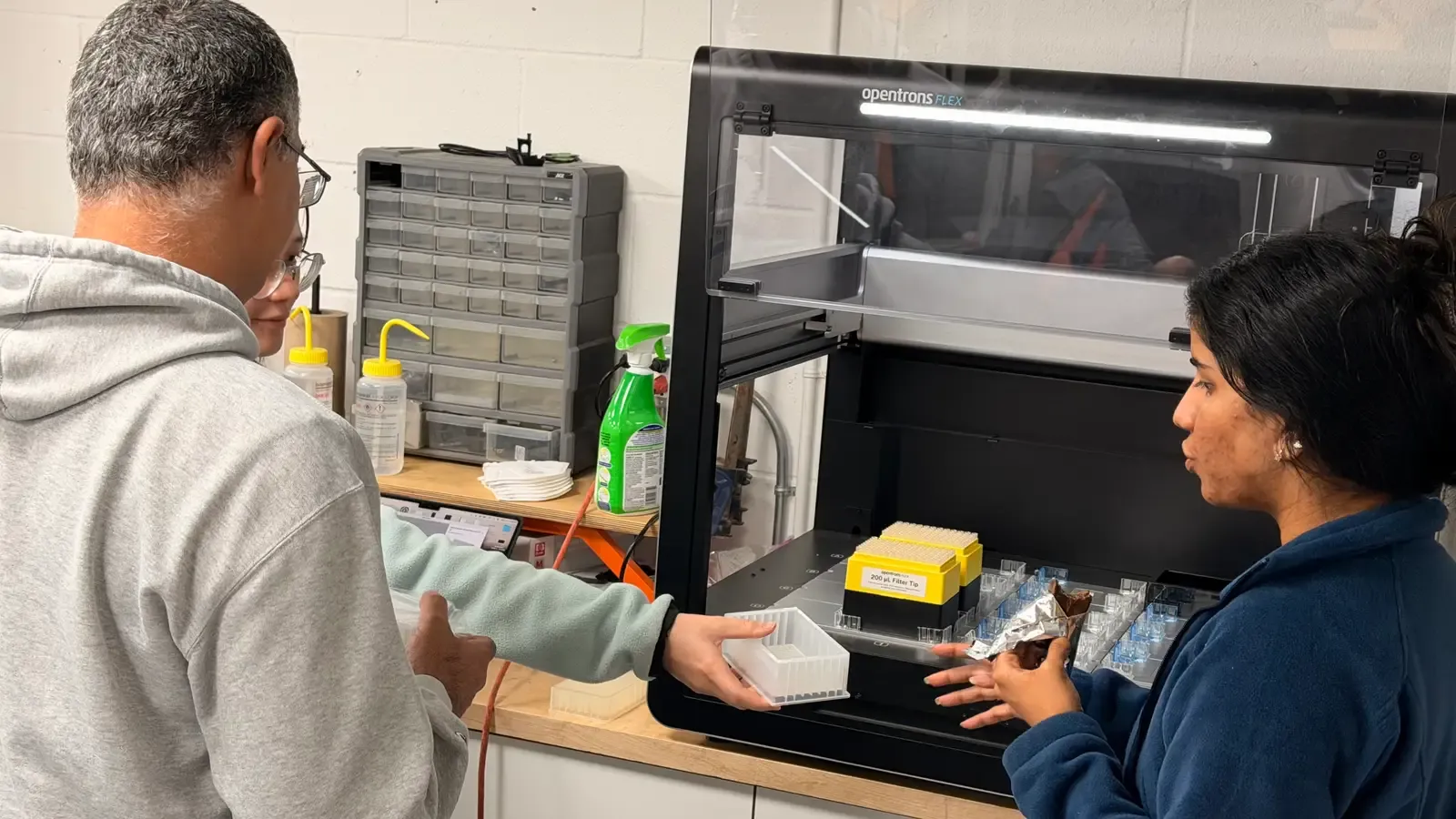
Question: What new liquid-handling workflows can you build and test on the Flex?
The fastest start was simple: pip install opentrons, have Claude draft a protocol, then run opentrons_simulate before it ever touches the robot. Teams also had OpentronsAI, the HTTP API, and PyLabRobot to work with.
Track C: Open Build
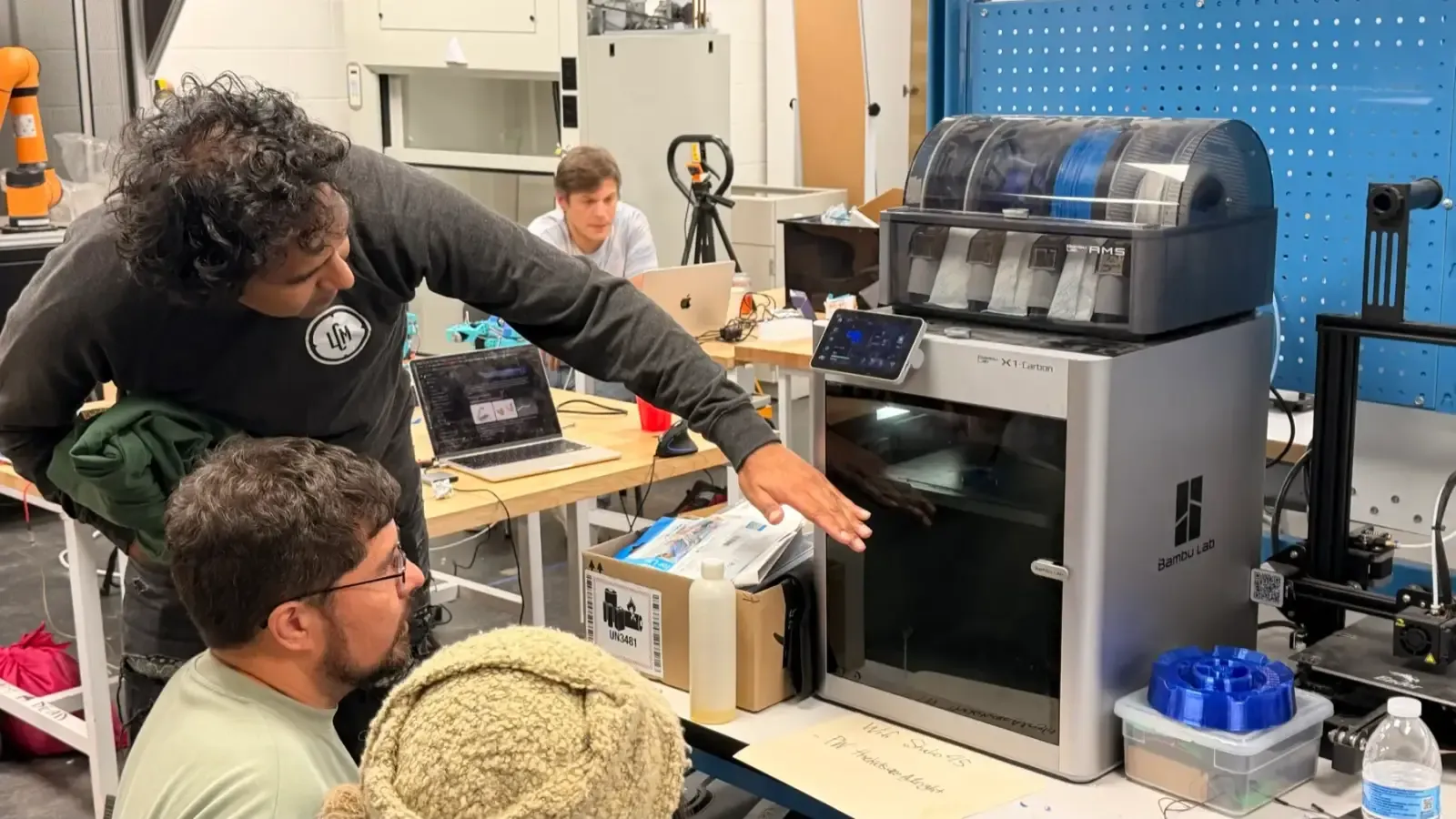
Question: What is the best lab tool you can build for under $200?
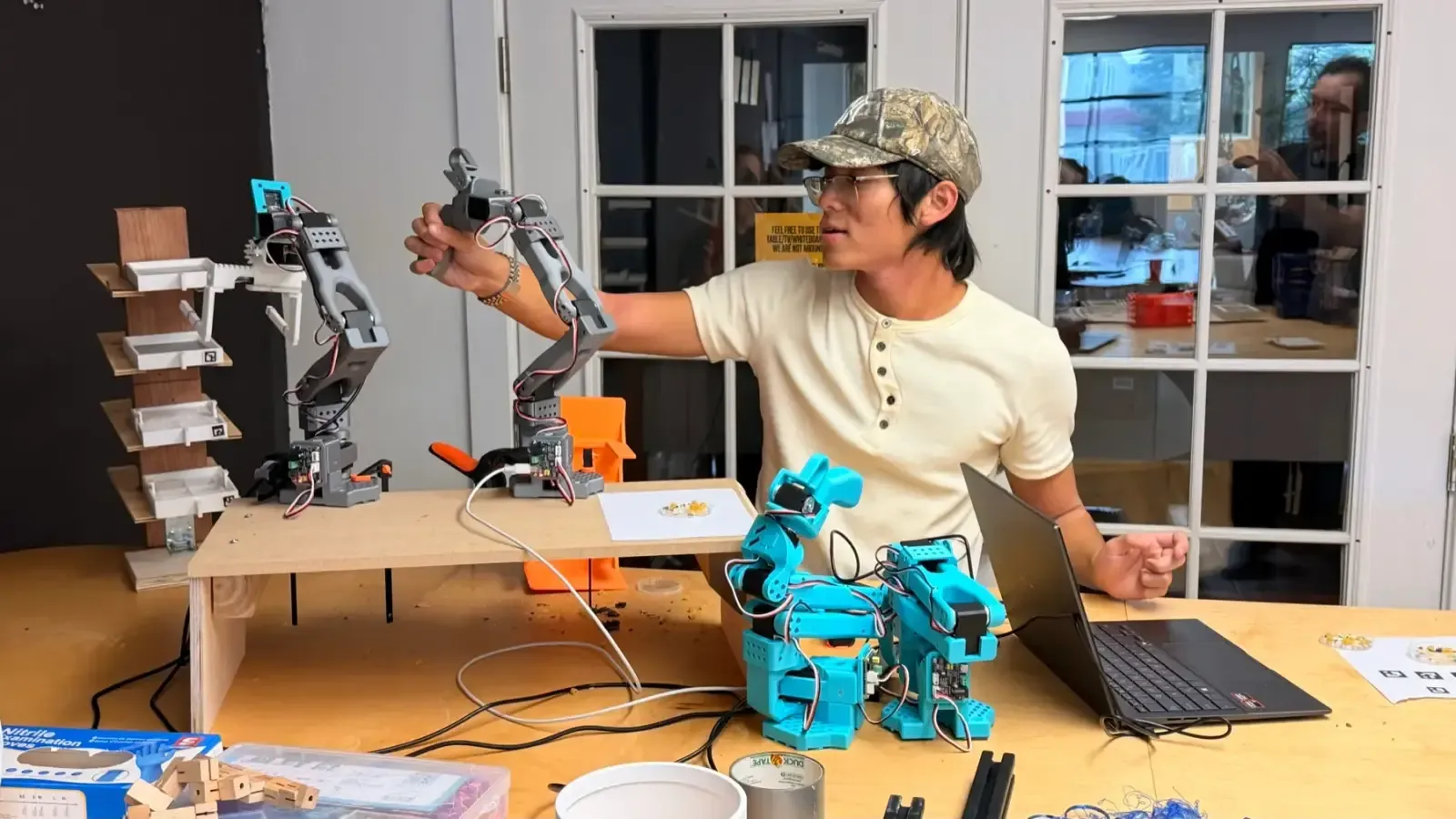
Teams could take on dexterity challenges or bring their own problem and hardware, with SO-101 arms, cameras, and printers on hand.
Six teams shipped new projects in 24 hours
Teams are listed in pitching order. RoboSwap won overall, and the judges gave shout-outs to Super Filter and Lab Sentry.
1. Lab Sentry — Judges’ Shout-out
Team: Simon Coelho, YM Liaw, Saee Pangarkar, Barmak Modrek, and Daniel Betz
Problem: Setup errors go undetected until a run fails. Wrong or missing labware, labware in the wrong slot, or an extra plate left on the deck can quietly ruin hours of work.
Solution: A live digital twin of the Opentrons Flex deck that blocks the run from starting until reality matches the protocol. A camera watches the deck, the twin mirrors it in 3D, and the protocol only runs once the check passes. Today it detects tip racks, microplates, and reservoirs.
The training data came from the twin itself. The team built the Flex and its camera from CAD files and images, aligned it to the real view, and had OpenAI Astra plan 527 synthetic scenes aimed at the model’s weak spots. The twin rendered and auto-labeled every scene, which trained two YOLO26n models to about 0.99 mAP on synthetic validation.
Next comes tip counting, liquid-volume checks from imaging, and an in-run twin that tracks tips, liquid, and labware during a protocol.
2. BaeBugs
Team: Andrew Tran, Wei Wang, and Byron P. Lee
Problem: Insect bulk samples are still sorted by hand before anything can be imaged, picked, or barcoded. BioKEA’s goal is “bags in, barcodes out.”
Solution: A vision-to-sieve lane in six checked steps. A camera and two independent sizers measure every body, and sizes are kept only where both agree. A planner picks the sieve stack and water flow. A digital twin of the bench must pass before the arm moves. Each fraction is imaged, and the results are handed to BugPicker in its own file format.
Every step is written to a hash-chained provenance log. If a referenced hash cannot be resolved to stored bytes, the graph records a break instead of trusting the result. The team logged 25 breaks and reported them as results.
The physical side was just as ambitious: 91 printed toy insects from 1 to 30 mm to train and test the models, 32 filter hole types, a wood sieve tower, 8 printable labware remixes for about $8.40 of filament, and an SO-101 arm. The repository shows 489 commits across 31 pull requests in two days.
One finding stood out. Training on real California museum photos beat synthetic-only training on out-of-state holdouts by a wide margin, while synthetic training sized the printed toys better.
View BaeBugs on GitHub, explore the lab workcell site, or read the draft preprint.
3. BugSorter 2.1: Print, Test, Repeat
Team: Aufstin Filiko and Forum Shah
Problem: A clumped Malaise sample poured into the current BugSorter does not break apart well, which hurts separation. The right mesh and gate size depends on the sample and on how specimens tumble and stand on end, so it has to be found by testing.
Solution: A loop that makes sizes cheap to try. Every mesh, gate, and tray is a CadQuery script sized for BugSorter’s holder. Change a number, simulate it, print it, and test it on the bench. A gate strip takes about six minutes to print.
The team bolted a printed tray and sieve to a handheld DeWalt tool as a demo rig, with pasta, rice, and quinoa standing in for the three size classes. A MuJoCo simulation of the stack runs each design before it is printed. Across 8,200+ simulations, it scored 444 sieve designs automatically. A Claude Code skill in the repository walks through each round and keeps the log, so anyone on the team can run the next one.
Next is calibrating the simulation against bench counts, then running the loop on real Malaise samples.
4. Super Filter — Judges’ Shout-out
Team: Renaud Renault, Dale Herzog, and Mohamed
Problem: Traditional insect sorting with filters struggles with tangled samples, surface tension, and debris. Separating bugs in liquid is nearly impossible with metal tools, specimens get damaged, and bugs of different sizes stick together.
Solution: Use those troublesome physical forces as the sorting mechanism. The team designed separate liquid and solid sorting chips. For liquid, smaller particles sediment more slowly because drag dominates, so a channel with a varying cross section separates a mix continuously into collection chambers. A “coin machine” flow path, turbulence, and reduced surface tension help break up clumps.
An optical inspection stage feeds items one at a time through a clear tube, where a high-speed camera takes a snapshot and a vision model classifies each one into its target group.
5. Athelas Apothecary
Team (You Shall Not Pipette): Stefanie Strasser, Erik Brinsmead, and Ryan George
Problem: Dose-response plates are still pipetted by hand. Every dilution series means planning volumes and well positions on paper or in Excel, and one wrong calculation or swapped column silently ruins a plate. Liquid handlers are powerful, but going from an idea to a safe protocol takes coding and trial runs.
Solution: One pipeline from a plate design in the browser to a run on the Opentrons Flex. Pick troughs, plate columns, and a recipe in a web console. The system computes volumes, replays and checks the plan well by well, generates a self-contained Flex protocol, and runs it through the official Opentrons simulator before the robot can start.
It was built to be safe on a real robot. An independent plan checker was tested on 300 random layouts, pipette limits are enforced, and fills refuse to run until the plate height is calibrated. A deck camera takes before-and-after snapshots of every run.
Next up: 384-well cell plates, a live well ledger fed from the robot’s run log, and barcode scanning that blocks runs on the wrong plate.
View Athelas Apothecary on GitHub.
6. 🏆 RoboSwap — Overall Winner
Team: Philip Thomas, Neil Wilson, Apurva Patel, Maya Kanehara, and Leo Epstein
Problem: Lab automation is mostly boxes and arms. Why does every new task need a new box?
Solution: Swap the tool, not the robot. RoboSwap is a tool changer for benchtop liquid handling. An SO-101 arm uses its stock gripper to lock onto a 3D-printed collar on an Integra electronic pipette, held in a simple wood-block dock. A wrist camera with a ChArUco board handles lens calibration, pose tracking, and tip detection.
The team was candid about what worked and what did not. Simulated movement sequences and teleoperated attachment worked. The friction-based lock was finicky to print, the SO-101 was not precise enough for automated attachment, and there was not time to integrate the camera. The next step is a robust locking mechanism on a higher-precision arm, with single- and multichannel pipettes, 96- and 384-well heads, grippers, and decappers as swappable tools.
What stood out
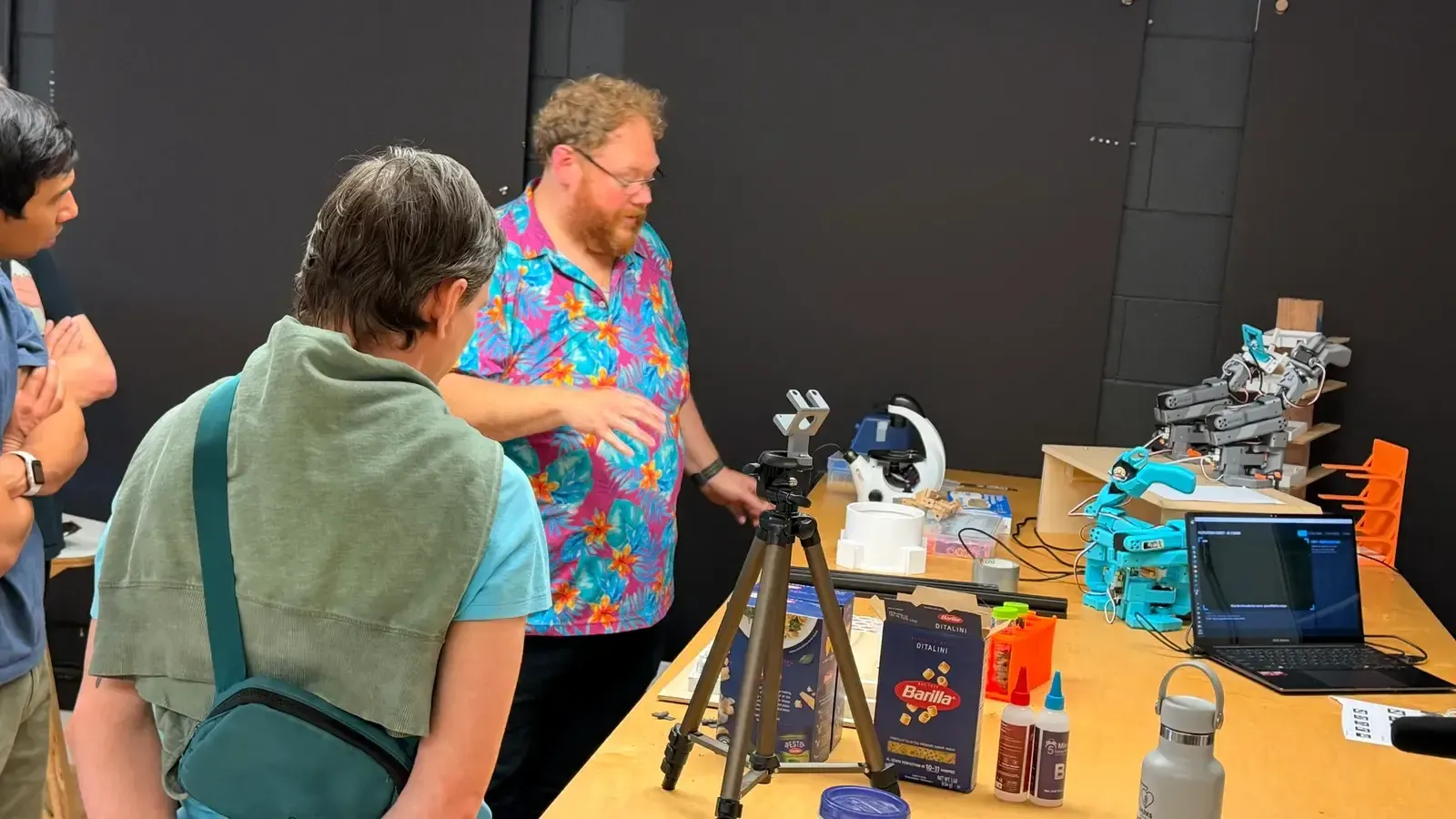
After seven hacks, three patterns from this weekend are worth sharing:
- Check it in a digital twin before the robot moves. Lab Sentry, BaeBugs, BugSorter 2.1, and Athelas Apothecary all checked a plan in simulation or against a twin before hardware moved. The question has shifted from “can an agent write the protocol?” to “how do we know it is safe to run?”
- Cheap, printable hardware gets you into real lab problems fast. Teams printed sieve gates in six minutes, a pipette collar, 91 toy insects, and labware for under $10, then tested each idea the same hour they had it.
- Sharing errors and pathways becomes part of the process to celebrate speed, not shy away from. BaeBugs logged 25 breaks in its chain of custody, and RoboSwap gave a full slide to what failed.
Thank you to everyone who made this possible!
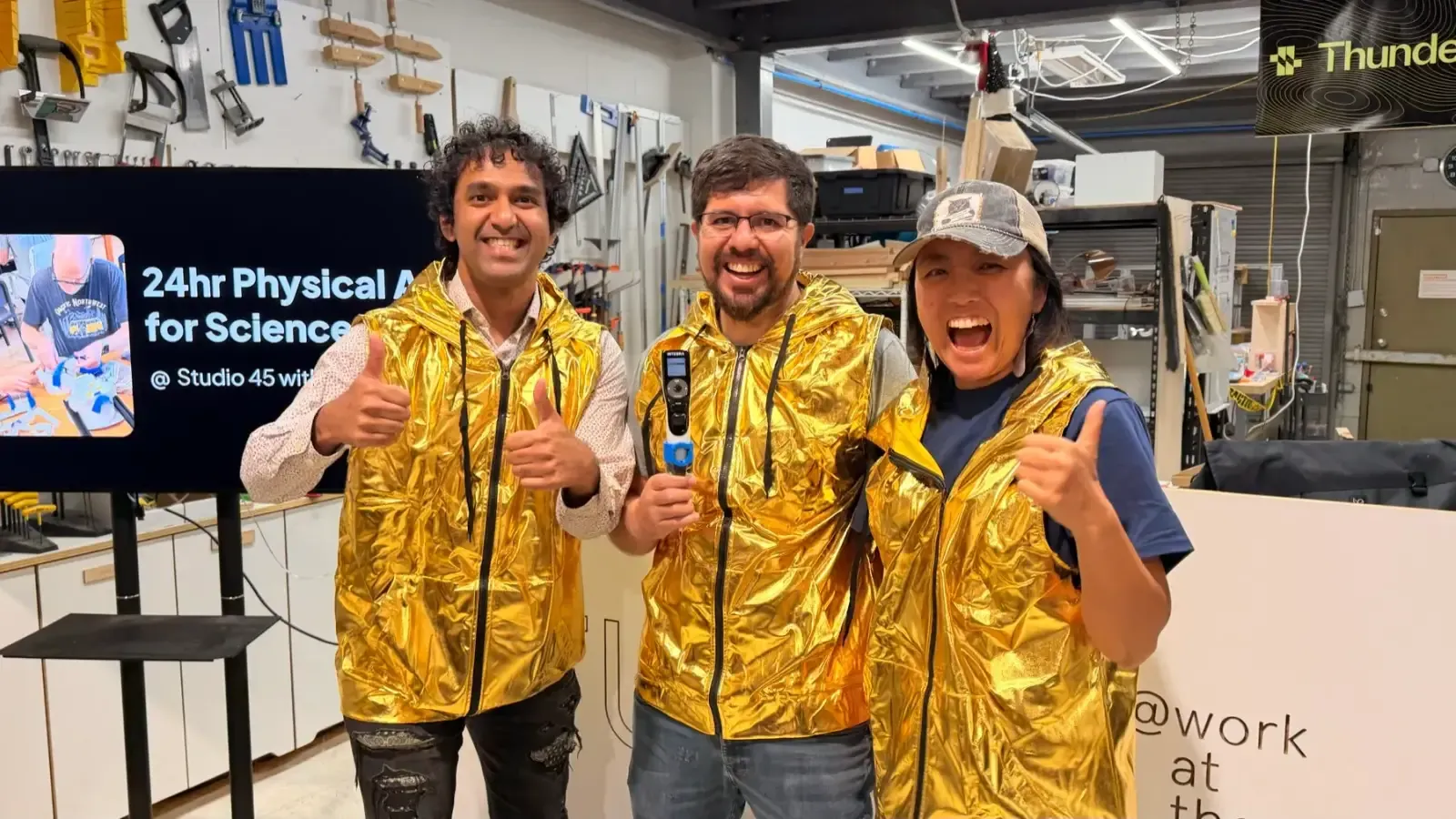
- Claude Community for partnering, and Studio 45 for the venue
- BioKEA and Sean Jungbluth for designing Track A and bringing the BugPicker workcell
- Community partners Bay Area Lab Automators and Luis Villa, Opentrons, Pantograph, Mave, and SF Hardware Meetup
- Mark, Kelsey, Aldair, and Luis for helping all weekend, including the 3D prints
- Our judges: Ilya Kolb, a scientist at Arcadia; Fiona Connolly, a scientist and digital community lead at Bits in Bio; and Yash Oza, who works on robotics at NVIDIA
The event was organized by Worldwide Studios, an education nonprofit helping professionals build with the latest AI, robotics, and science tools to solve important problems. We host 100-day fellowships and free community events.
Reach out if you want to collab on a future one.